The First Serbian Uprising

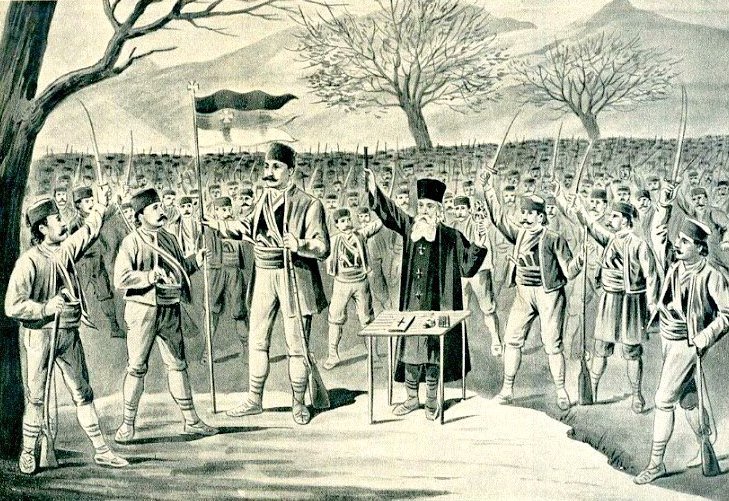
The First Serbian Uprising
This uprising formed part of the wider Serbian Revolution and marked the beginning of the region's struggle for national liberation. It began in 1804 as a Christian response to the resettlement of Janissaries in the area, supported by Osman Pazvantoğlu. Initially, the rebels aimed to restore the contested central authority and consequently received support from the Ottoman Empire.
At first, relations between the rebels and the Ottomans were loyal, but the brutal actions of the Janissary dahis, culminating in the “Slaughter of the Knezes”, transformed the uprising into a national liberation struggle. In 1806, the Sublime Porte sent troops under the vizier Bekir Pasha to suppress the revolt.
In August 1804, following the defeat of the Janissary forces, the uprising acquired a national character. The insurgents also acted as Russia's allies during the Russo-Turkish War of 1806–1812. After the rapid conclusion of the Treaty of Bucharest in 1812, the Ottoman Empire again suppressed the uprising.
Peace negotiations were conducted through the Bulgarian Petar Ichko, who played an important role in concluding “Ichko's Peace”. Despite Bulgarian participation in the uprising, no concrete benefits were achieved for them, and the revolt ended in Ottoman suppression. Miloš Obrenović, the new Serbian leader, played a key role in the uprising's defeat and in the killing of Karađorđe Petrović in 1817.
Combining the struggle for religious and national freedom, this uprising marked the beginning of the Serbian struggle for independence.
The uprising was suppressed. Macedonia and sections of the Bulgarian people also participated. Nevertheless, the revolt brought no concrete benefits to Bulgarians, only further suffering and reprisals.
Share:


