Union with the Latins

Union with the Latins
In the first half of the 13th century, the Second Bulgarian Empire reached its height under Tsar Ivan Asen II, one of the greatest rulers in Bulgarian history. The year 1230 is recorded as a turning point for the Balkans, when events connected with the union with the Latins and the overwhelming victory at Klokotnitsa changed the region’s political map.
After the Fourth Crusade in 1204 and the fall of Constantinople to the crusaders, the Latin Empire emerged in the Balkans, threatening the region’s established powers. Byzantium was divided between the Latin Empire and various Greek successor states, such as the Despotate of Epirus and Nicaea. In this context, Tsar Ivan Asen II sought political alliances to consolidate Bulgaria’s position.
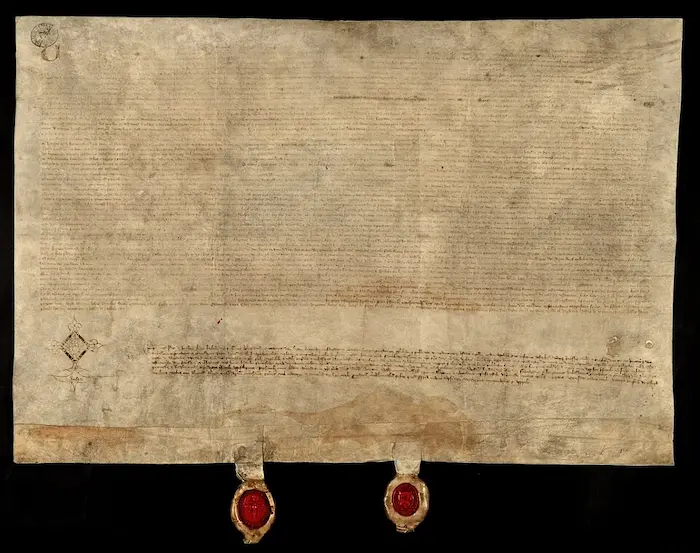
In 1230, the Bulgarian ruler concluded a union with the Latin Empire, joining forces against their common enemies, above all Epirus and Byzantium. This political and ecclesiastical alliance was an important strategic move that strengthened Bulgaria’s international position and provided support against the ambitions of Theodore Komnenos, despot of Epirus.
On 9 March 1230, the historic Battle of Klokotnitsa took place, in which Tsar Ivan Asen II’s army defeated Theodore Komnenos’s forces. The Epirote despot, who sought to expand his domains into Bulgarian territory, was struck down by a surprise attack and defeated.
The victory was decisive: thousands of Epirote soldiers were killed or captured, and Theodore himself was seized and blinded, according to the chroniclers. This success made Bulgaria the dominant power in the Balkans for the following decades. The territories of Epirus and substantial parts of Thrace and Macedonia came under Bulgarian rule.
Share:


