OFFICES OF STATE
Terms of office
- President — Chairman (President)
Diplomacy and party leadership
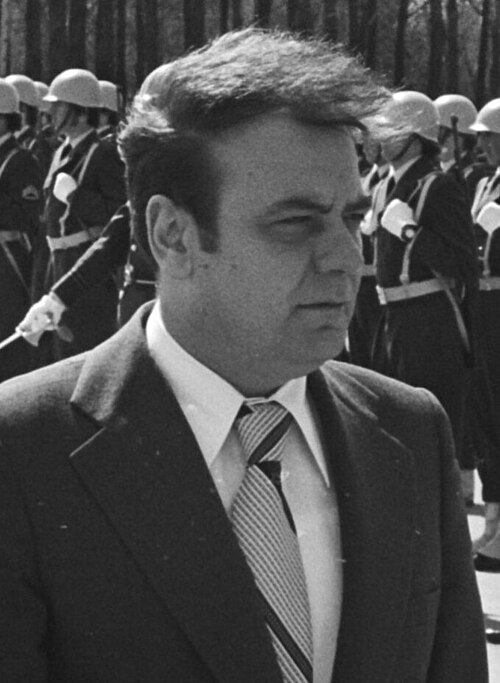
Petar Mladenov built his political career within socialist Bulgaria’s institutions. He graduated from the Moscow State Institute of International Relations in 1963 and served as foreign minister from 1971 until November 1989. This unusually long diplomatic tenure made him one of the Bulgarian leadership’s principal representatives abroad.
The change of leadership in 1989
Following Todor Zhivkov’s removal on 10 November 1989, Mladenov became leader of the Bulgarian Communist Party and, later that month, chairman of the State Council. He briefly combined the leading party position with the highest state office. A change initiated within the ruling party developed into a broader transition towards political pluralism and institutional reconstruction.
The first presidential office
On 3 April 1990 the collective State Council was replaced by an individual head of state, styled chairman or president of the republic. Mladenov was the first holder of this new office. Its constitutional framework differed from the presidency established in 1991, and he was not elected by a nationwide popular vote. These distinctions matter when comparing him with subsequent presidents.
A brief presidency during the transition
His presidency ended on 6 July 1990, only months after the office was created. Stanko Todorov and Nikolai Todorov then served in an acting capacity before the Grand National Assembly elected Zhelyu Zhelev. Mladenov’s historical position bridges two systems: he was a senior representative of the previous regime and the first holder of the newly created presidential office.
Sources and documents
References accompany each section. Speeches and reports by political figures also reflect their own perspective.
- Bulgarian State Archives ↗politburo.archives.bg
- Presidency · institutional history ↗www.president.bg
Reference data last reviewed: . End dates in the timeline indicate the handover of office.
