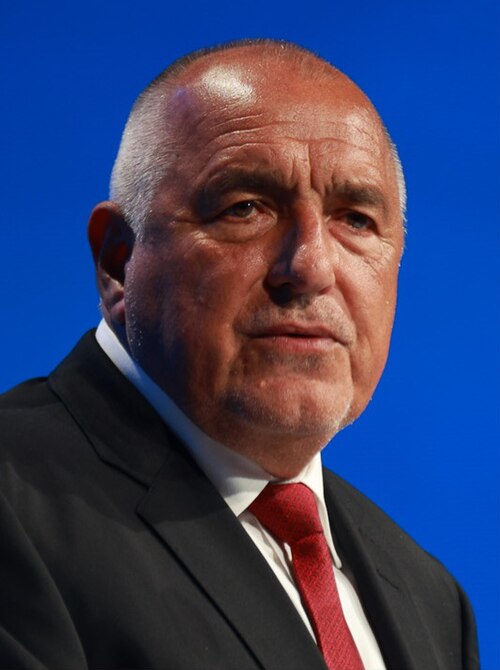
OFFICES OF STATE
Terms of office
- Prime minister — First government
- Prime minister — Second government
- Prime minister — Third government
From the Interior Ministry to Sofia City Hall
Before the premiership, Boyko Borisov had a career in security and served as chief secretary of the Interior Ministry. He became mayor of Sofia in 2005. The municipal chronology places his mayoral period after Stefan Sofiyanski’s administration. This stage preceded his move into national executive leadership in 2009.
Three separate governments
Borisov headed three governments: in 2009–2013, 2014–2017 and 2017–2021. Other cabinets served between them, so the period was not one uninterrupted premiership. Each term had a different parliamentary setting and cabinet membership. His lengthy role in government spanned several stages of Bulgaria’s EU membership and different domestic political crises.
European funding and the Council presidency
In November 2009 the European Commission resumed suspended PHARE payments following corrective work on control systems. The Finance Ministry reported the decision and its conditions. During Borisov’s third government, from January to June 2018, Bulgaria held its first presidency of the Council of the EU. This involved organising work and seeking agreement among member states, not unilateral leadership of the Union.
Relations with North Macedonia
The Treaty of Friendship, Good-Neighbourliness and Cooperation with the then Republic of Macedonia was signed on 1 August 2017 and entered into force in February 2018. Bulgaria’s Foreign Ministry lists it among the principal bilateral documents. Signing was a specific act during Borisov’s third cabinet, while implementation and the handling of later disputes formed a longer process.
ERM II and banking supervision
In July 2020 the lev entered Exchange Rate Mechanism II, followed in October by close cooperation with the ECB on banking supervision. These were preparatory steps towards the euro area. They were not equivalent to adopting the euro, which occurred in 2026 under another government. The ECB’s chronology clearly distinguishes these decisions.
Public controversy and the rule of law
In 2020 the European Parliament adopted a critical resolution on the rule of law and fundamental rights in Bulgaria, raising concerns about judicial independence, corruption and media freedom. This was a European institution’s political assessment, not a criminal judgment against an individual. It is an important document for the controversies surrounding the end of Borisov’s third term, which concluded in May 2021.
Sources and documents
References accompany each section. Speeches and reports by political figures also reflect their own perspective.
- Sofia Municipality · former mayors ↗www.sofia.bg
- Presidency · appointment and elections, 2017 ↗www.president.bg
- Presidency · Stefan Yanev ↗m.president.bg
- Ministry of Finance · resumption of PHARE payments, 2009 ↗www.minfin.bg
- Council of the EU · Bulgarian presidency ↗www.consilium.europa.eu
- MFA · relations with North Macedonia ↗www.mfa.bg
- ECB · ERM II and euro area accession ↗www.ecb.europa.eu
- European Parliament · rule of law resolution, 2020 ↗oeil.europarl.europa.eu
Reference data last reviewed: . End dates in the timeline indicate the handover of office.
