Republic of Bulgaria

Republic of Bulgaria
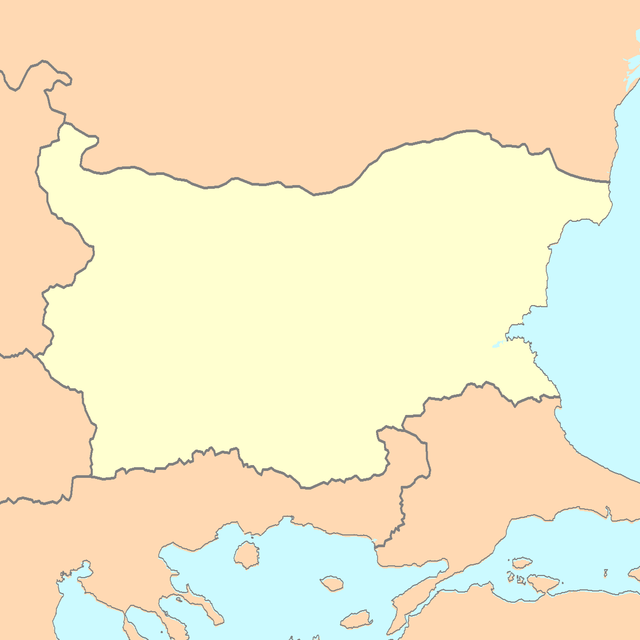
Republic of Bulgaria
The following years in Bulgaria were marked by political and economic reforms pursued with varying intensity. This period is often described as the transition to democracy and a market economy, although views differ on precisely when it ended. On 15 November 1990, the Seventh Grand National Assembly changed the country's name from the People's Republic of Bulgaria to the Republic of Bulgaria. On 7 December 1989, thirteen non-communist political groups joined forces in the Union of Democratic Forces, electing Zhelyu Zhelev as leader. On 3 January 1990, a new political body, the Round Table, was formed. The Movement for Rights and Freedoms was established on 4 January. On 29 January, Todor Zhivkov's arrest was announced on charges of abuse of power and inciting ethnic hatred. An extraordinary Fourteenth Congress of the Bulgarian Communist Party took place from 30 January to 2 February, seeking to renew the party by abolishing the Politburo and Central Committee. Petar Mladenov relinquished party leadership while remaining head of state and was replaced in the party by Aleksandar Lilov. On 23 February, nearly 200,000 people demonstrated in Sofia against the slow pace of Round Table talks. On 27 February, Bulgaria's national holiday was changed back from 9 September to 3 March. At the end of March, the Fatherland Front was renamed the Fatherland Union, and on 6 April the Communist Party became the Bulgarian Socialist Party, or BSP. Elections to the Seventh Grand National Assembly in June were won by the BSP, worsening relations among anti-communist forces and prompting student protests and occupations. President Mladenov resigned, and Zhelyu Zhelev became Bulgaria's first democratically elected president, taking office on 8 August 1990.
On 12 July 1991, the Seventh Grand National Assembly adopted the Constitution of the Republic of Bulgaria. Dimitar Popov's government (1990–1991), also called the 'government of hopes', began price liberalisation. Bulgaria became the Council of Europe's twenty-seventh full member on 7 May 1992 and joined NATO on 29 March 2004. On 25 April 2005, it signed the Treaty of Accession to the European Union, ratified by the Thirty-Ninth National Assembly on 11 May. Bulgaria became an EU member on 1 January 2007. On 1 January 2018, it assumed the Presidency of the Council of the European Union for six months.
Share:


Rulers during this period
