Revolutionary Vasil Levski

Revolutionary Vasil Levski

Vasil Levski
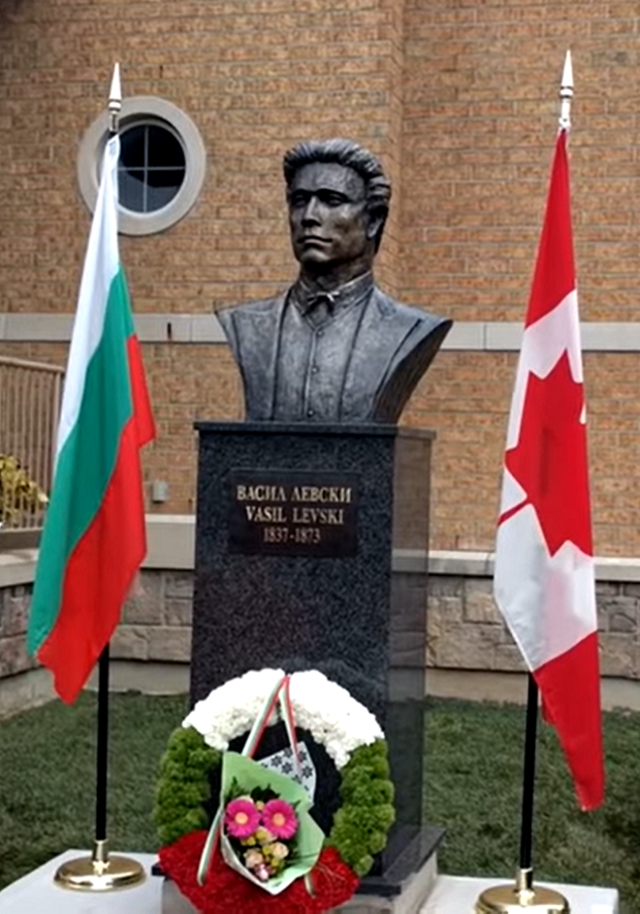


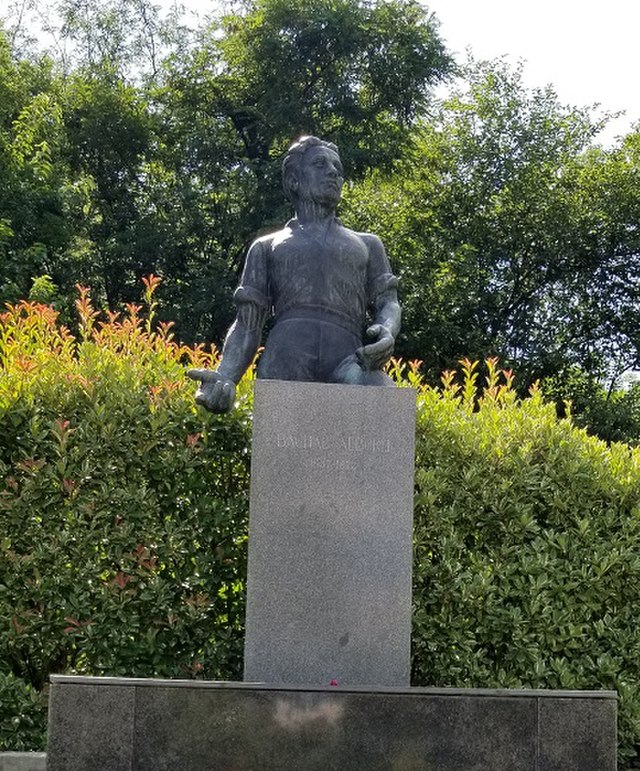


Vasil Ivanov Kunchev, known as Vasil Levski, was a Bulgarian revolutionary and national hero. He played a key role as an ideologist and organiser of the Bulgarian national revolution and founded the Internal Revolutionary Organisation (IRO). Levski is also called the "Apostle of Freedom" because of his efforts to free Bulgaria from Ottoman rule. He travelled around the country, established local revolutionary committees and prepared a general revolution.
His dream was to see the establishment of a pure and sacred republic in which all citizens had equal rights regardless of nationality or religion. According to most sources, Vasil Ivanov Kunchev was born on 18 July 1837 in Karlovo, but more recent research indicates that he was born on 18 July 1840.
Levski came from a family with a remarkable lineage. His father, Ivan Kunchev, was from the village of Kochmalare and worked in dyeing and braid-making. Despite initial material success, he later fell victim to an unfortunate guarantee he had given and to a business partner's disloyalty.
Levski began his education at the monastic school in Karlovo and continued at a monitorial school, combining his studies with improving his skills in the craft of making caftans. After his father's death in 1851, he took on responsibilities for his family and began working as a maker of coarse woollen clothing.
In 1852, Levski became a novice under his maternal uncle, Archimandrite Vasiliy, a travelling representative and collector of donations for Hilandar Monastery in Karlovo and Stara Zagora. In the following years he studied church singing and worship and collected dues for the monastery.
In 1858, Levski took monastic vows and became a monk under the name Ignatius. Afterwards he studied at the Plovdiv Diocesan Class School, where he began developing his ideas about freedom and revolution. In 1861, after his uncle's death, Levski decided to devote himself entirely to the revolutionary struggle.
With funds provided by the Bulgarian Society and the "Bratska Lyubov" community cultural centre, part of the Young Bulgaria organisation, Vasil Levski left Turnu Măgurele on 7 December 1868, travelling by steamer along the Danube, overland and again by steamer across the Black Sea to Constantinople. After arriving in Constantinople on 11 December 1868, Levski began his first tour of the Bulgarian lands, still within the Ottoman Empire. This period was marked by efforts to gather information and conduct revolutionary advocacy as he familiarised himself with the conditions for revolutionary activity and preparations for an uprising.
In March–April 1869, Levski left Constantinople for Thrace and northern Bulgaria, passing through towns such as Plovdiv, Karlovo, Sopot, Kazanlak, Sliven, Veliko Tarnovo, Lovech, Pleven and Nikopol. He spoke with trusted associates with the aim of involving them in the revolutionary cause. Despite his optimism, Levski realised that the uprising could not be proclaimed as quickly as he had expected. He recognised the need to prepare the people through revolutionary committees, which he established in various towns.
After returning to Turnu Măgurele in August 1869, Levski became actively involved in the life of the Bulgarian emigrant community. In late 1869 he joined Lyuben Karavelov in establishing the Bulgarian Revolutionary Central Committee (BRCC). He insisted that the centre of preparations for the uprising should move inside the country and that the Bulgarians should rely on their own strength. Levski kindled the emigrant activists' enthusiasm for organising the people and sought to challenge traditional ideas about foreign assistance and directing the revolutionary movement from abroad.
In 1870, Levski stayed in Turnu Măgurele and Bucharest, where his younger brother Hristo died on 9 April.
Vasil Levski was captured on 27 December 1872 in Tsvetan Radoykov's house in Sofia. Information about his hiding place was passed on by the Lovech merchant Georgi Gerdzhikov, also called "the Thracian merchant". Gerdzhikov betrayed Levski to the Ottoman authorities after prearranged meetings with Turkish police officers in Sofia. It is thought that Gerdzhikov had been threatened and forced to act as an agent provocateur and betrayer of the revolutionary movement. He managed to gain Levski's trust and learn his whereabouts in Sofia. Thus Gerdzhikov became a key factor in the capture of the Apostle of Freedom. Levski's betrayal was part of the Ottoman police strategy for suppressing the revolutionary movement in Bulgaria. Vasil Levski was arrested and immediately placed under guard in Sofia, where he was tortured and interrogated by the Turkish police.
Share:


