Revolutionary Toma Pozharliev

Revolutionary Toma Pozharliev
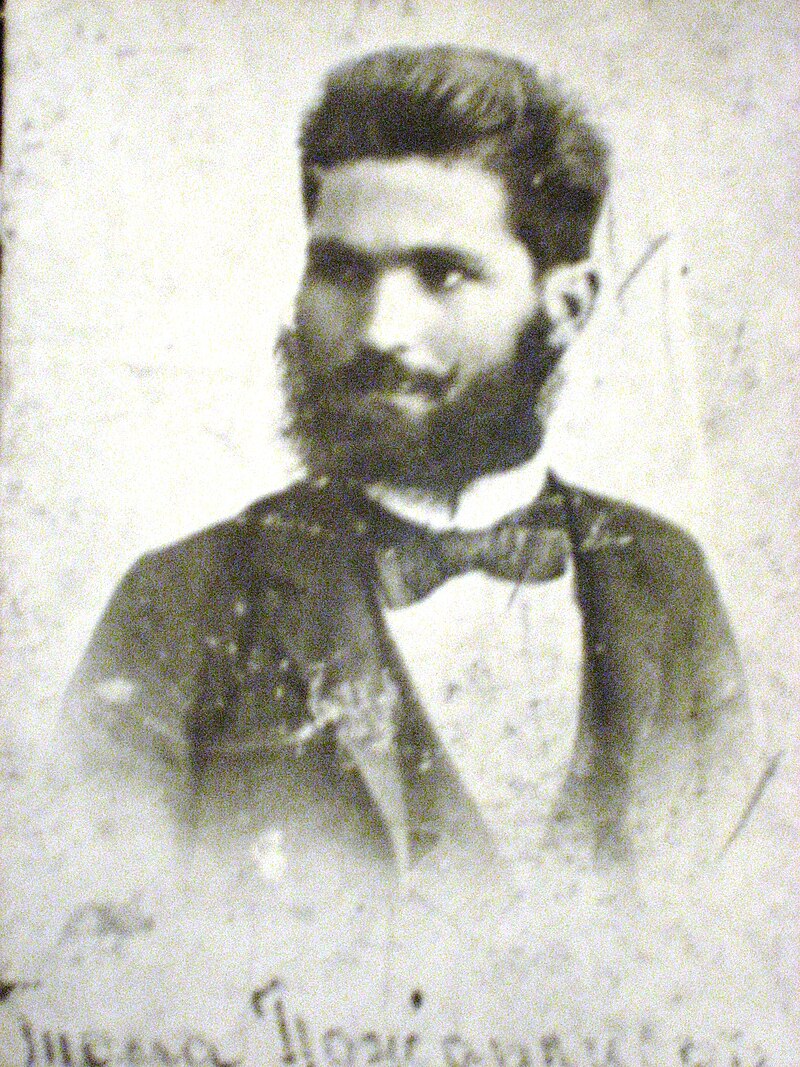
Toma Pozharliev
Toma Petrov Pozharliev was a Bulgarian revolutionary and voivode of the Supreme Macedonian-Adrianople Committee in the Voden district, and later of the Internal Macedonian-Adrianople Revolutionary Organisation in the Kratovo and Chepelare districts. He was born in 1870 in Enidzhe Vardar, now Giannitsa, Greece, into the family of Colonel Ivan Pozharliev.
Toma Pozharliev became an IMARO member in 1895 and taught in the village of Bistritsa in the Gorna Dzhumaya district. In 1896 he was arrested and interned in his native town, after which he fled to the Principality of Bulgaria in 1898. He enrolled at the Military School in Sofia but left to join a detachment in Macedonia.
During the Ilinden-Preobrazhenie Uprising in 1903, Toma Pozharliev and Atanas Murdzhev became voivodes of a detachment in the Kratovo district, fighting under the banner of the Razgrad Macedonian-Adrianople Society. On 25 September 1903 their detachment received a blessing in the Ruen Mountains and subsequently fought a fierce battle near the village of Lukovo on 25 September 1903, in which the voivodes Grigor Manasiev, Ivan Topchev and Nikola Dechev were killed. After the battle, Toma Pozharliev and Atanas Murdzhev managed to withdraw during the night with the surviving fighters towards the border of the Principality of Bulgaria.
Later Toma Pozharliev participated in forming a force of nearly 450 insurgents and fought near Kriva Palanka and the village of Dolna Lyubata. In 1905–1906 he was sent as a voivode to the Chepelare and Ahachelebi districts and Aegean Thrace to combat marauding detachments. In 1905 he succeeded in capturing Nikola Gyumyushev's detachment and apprehending the marauders Kolyo Pachamanov and Kolyo Chilingirov.
Toma Pozharliev subsequently returned to Bulgaria, where he studied land surveying and worked as a surveyor in the Kazanlak and Svilengrad districts. In 1925, during IMRO's internal feuds, a death sentence was issued against him, and he hid in Batak until 1935. He died on 5 December 1938 in Sofia and was buried there. His grave was destroyed during the Allied bombing of Sofia in the Second World War.
Share:


