Revolutionary Georgi Danchov — Zografina

Revolutionary Georgi Danchov — Zografina
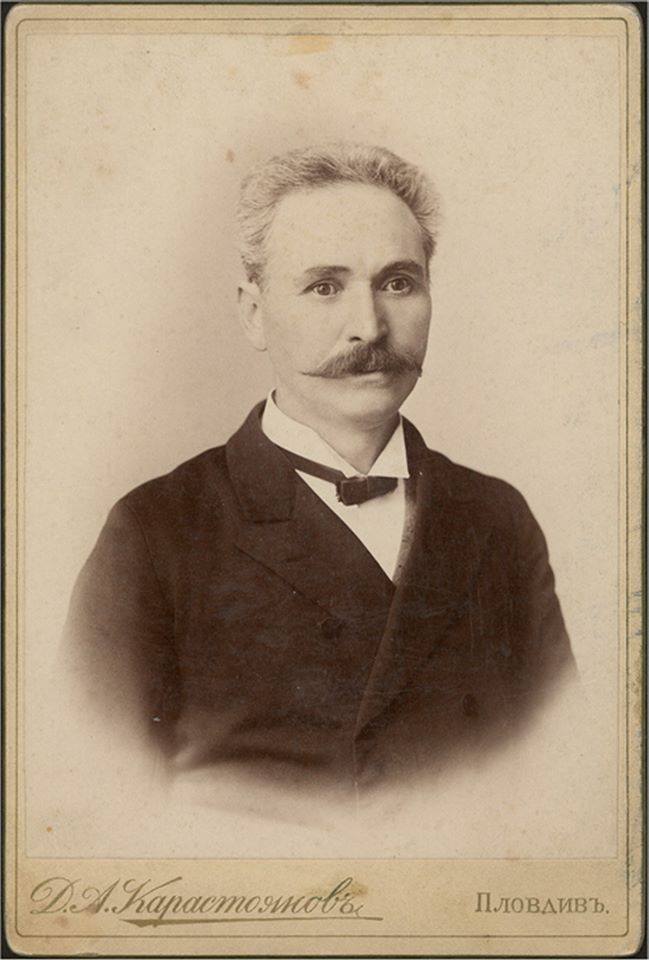
Georgi Danchov — Zografina
Georgi Popgeorgiev Danchov, known as Zografina, was a Bulgarian National Revival artist and revolutionary. He was a close associate of Vasil Levski and painted what is considered the most accurate portrait of the Apostle.
On 24 May 1869, Vasil Levski arrived in Chirpan and stayed at Danchov's home. There he established the Chirpan Local Revolutionary Committee, headed by Georgi Danchov. After Levski's arrest, Danchov participated in organising an unsuccessful attempt to free him. For his involvement, Georgi Danchov was arrested and imprisoned in Diyarbakır in 1873 with a life sentence. Even in prison he retained his artistic enthusiasm and produced the lithograph "Mermaids". In 1876 he managed to escape to Russia.
During the Russo-Turkish War of 1877–1878 he joined the Bulgarian Volunteer Corps. In 1879, in Plovdiv, he created his celebrated lithograph "Free Bulgaria", inspired by the still-fresh emotions of the Liberation.
Georgi Danchov participated in the Unification of the Principality of Bulgaria and Eastern Rumelia. In 1885 he was elected a member of the Provisional Government. From 1890 to 1893 he served as deputy mayor of Plovdiv. He also helped organise the first Agricultural and Industrial Exhibition in Plovdiv in 1892 and was an active member of the People's Liberal Party.
In his artistic work, Georgi Danchov painted icons for churches in various towns. In 1861 he painted the altar apse of Arapovo Monastery and the vault of the church in the Monastery of the Holy Saviour. He also created his first lithographs: portraits of Midhat Pasha and the composition "Rayna Knyaginya in the Cave". In 1867 he produced 19 thematic paintings depicting Bulgarian costumes and everyday scenes, shown at an exhibition at Moscow University. He also painted portraits of Bulgarian revolutionaries and public figures, including Vasil Levski, Hristo Botev, Georgi Rakovski, Zahari Stoyanov and Stefan Stambolov. He was also among Bulgaria's earliest photographers.
Share:


