Tsepina Fortress

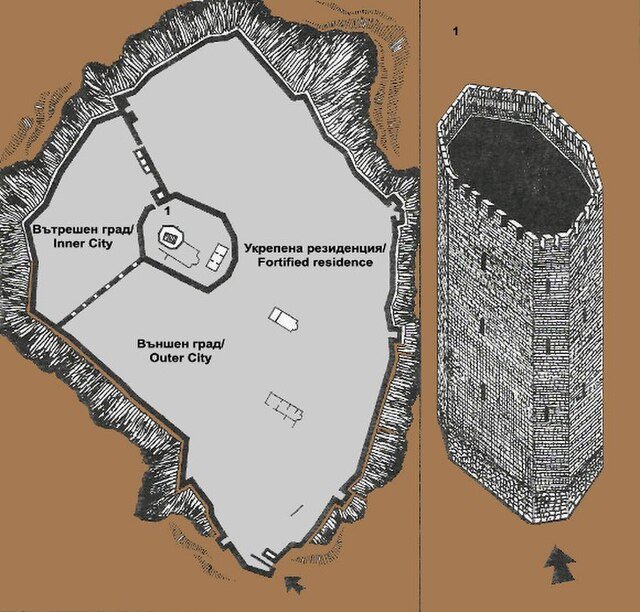
Tsepina Fortress
Tsepina Fortress is a historical and archaeological site that played an important role in different periods of Bulgaria's history. Established in the mid-ninth century, it witnessed the arrival and departure of various rulers and empires. Tsepina became the seat of Despot Alexius Slav's domains after 1207, when he declared himself independent. The fortress is imposing, with outer defensive walls enclosing a large area. In 1373 Tsepina fell under Ottoman rule, after which its history was linked to the Ottoman Empire's influence in the region. Archaeological investigations around Tsepina have uncovered traces of an Early Iron Age Thracian settlement and Roman and Late Antique inhabitants. Remains include a three-aisled basilica from the Early Christian period and medieval dwellings. Systematic investigation reveals the fortress's medieval appearance. It consisted of a fortified urban core and a settlement below it. Outer defensive walls enclosed a substantial area, while the citadel within was protected by additional walls. Research has revealed two churches and water cisterns in the fortress. One church dates from the Early Christian period; the second, a single-nave church, dates to the twelfth–thirteenth century.
Southern Bulgaria, Rakitovo Municipality, Ninth century
Share:


