Transfiguration Monastery

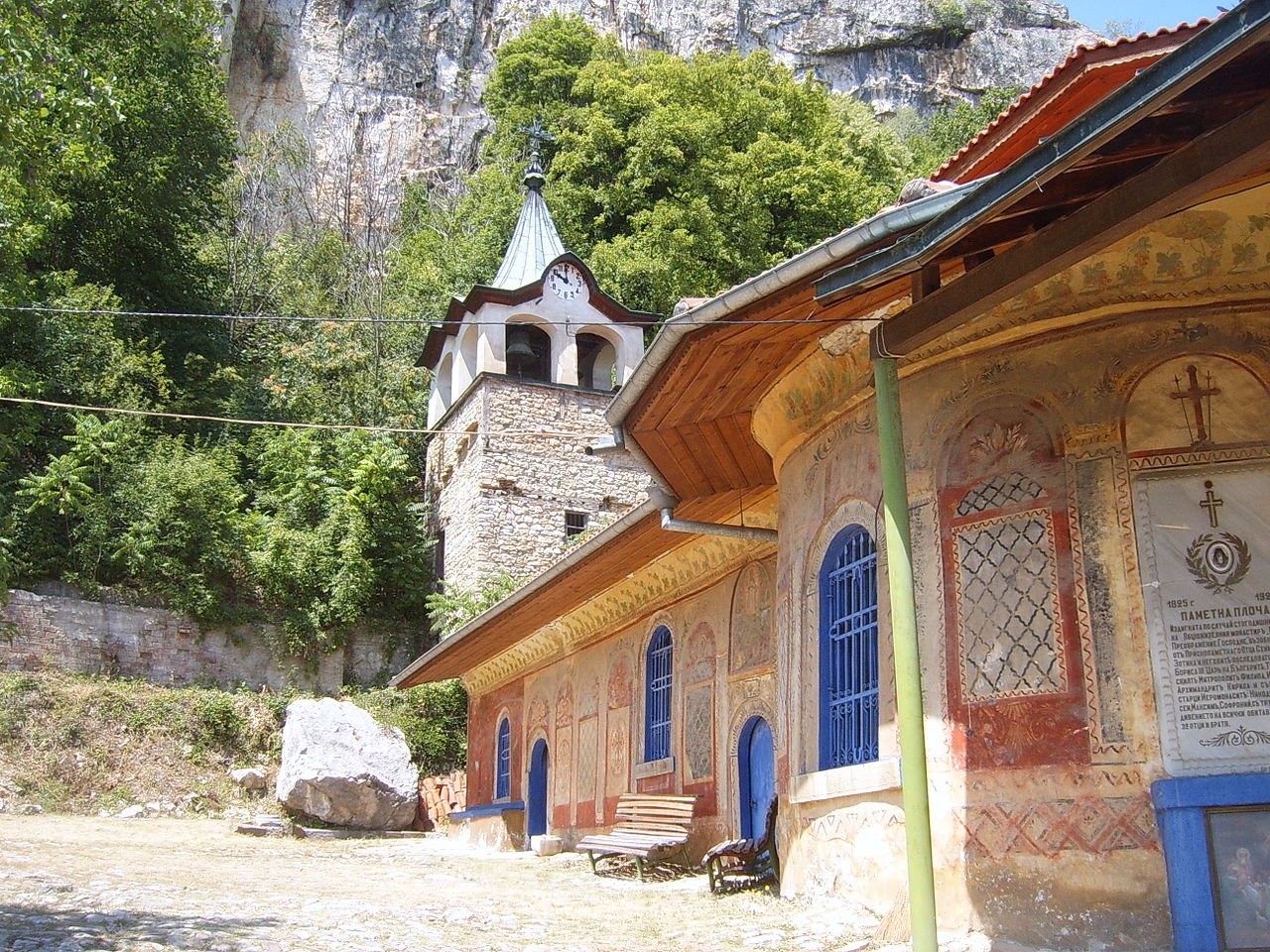
Transfiguration Monastery
The Transfiguration Monastery is a historic site in northern Bulgaria, seven kilometres north of Veliko Tarnovo, in the Dervent Gorge of the Yantra River. Founded during the Second Bulgarian Empire in the thirteenth–fourteenth century, it is Bulgaria's fourth-largest monastery and the largest around Veliko Tarnovo.
It is also known as Sara's or Shishman's Monastery, associated with Sara, the second wife of the Bulgarian tsar Ivan Alexander, and their son Tsar Ivan Shishman. They donated substantial funds for its reconstruction and repair in 1360, after which it acquired autonomy.
During the Middle Ages the monastery stood elsewhere, but after its destruction in the late fourteenth century it was re-established at its present location in 1825 by Father Zotik, a monk from Rila. Its nineteenth-century buildings are a typical example of medieval fortress monasteries.
Construction of the main church began in 1834. It was completed in 1837 and decorated with wall paintings by Zahari Zograf. The monastery is associated with revolutionaries such as Filip Totyu, Angel Kanchev and Father Hariton Halachev, who found refuge there.
The Transfiguration Monastery combines historical, cultural and religious significance and is a national historical monument. It is distinguished by its rich collection of wall paintings, icons and other cultural treasures, which form an important part of Bulgaria's cultural heritage. Its designation as a national monument helps preserve the richness of Bulgarian history and culture and pass it on to future generations.
The Transfiguration Monastery remains active and is an important centre of spiritual and cultural life in the region.
Veliko Tarnovo Province, Thirteenth–fourteenth century
Share:


