Thracian Tomb of Kazanlak

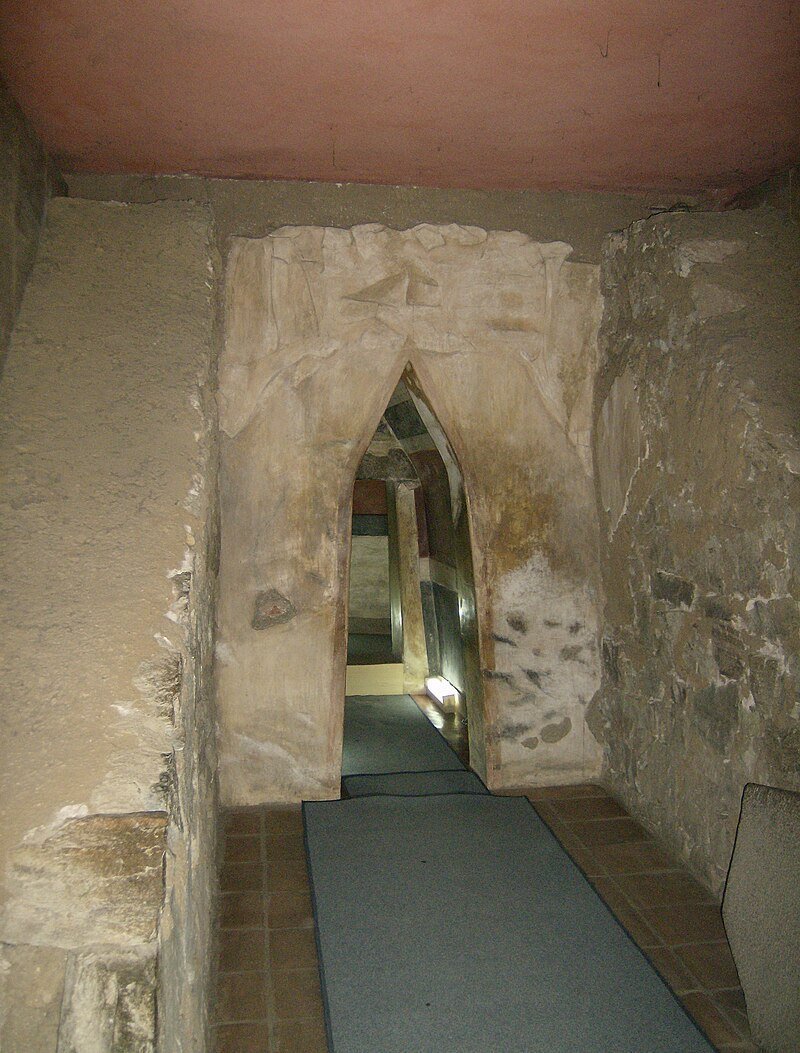
Thracian Tomb of Kazanlak
The tomb at Kazanlak is world-famous for the exceptionally preserved wall paintings in its corridor and domed chamber, which make it one of the best-preserved monuments of ancient painting from the Early Hellenistic period. The walls of the dromos and burial chamber display exceptional painted decoration covering 40 square metres. These paintings depict various moments from the earthly, military and afterlife existence of the Thracian ruler buried in the tomb.
The painter Kodzimasēs Chrēstos, known in ancient history, worked with four basic colours: black, red, yellow and white. Wet fresco was used for the decorative and figurative painting, while tempera was used to colour the floor and walls. Encaustic technique was also employed in the decoration, giving the plaster a glossy, almost mirror-like sheen.
The wall decoration imitates the appearance of a lavish building faced with marble slabs and finished with architectural details. The burial chamber's antechamber is plastered with clay. The frieze on the eastern wall of the dromos depicts foot soldiers and mounted warriors in a clash between opposing forces. At the centre of the scene are two warriors wearing chitons of different colours and pointed shoes, armed with knives and spears. Other foot soldiers and mounted warriors appear around them.
At the centre of the frieze on the western wall is a scene similar to that on the eastern wall, with one warrior kneeling before another. This moment may represent a historical event in the buried ruler's life, as Ivan Venedikov believes, or a mythical scene depicting the deceased's military glory, according to Ivan Marazov.
The domed chamber contains a broad frieze of figurative painting forming an extensive composition of many figures at a funerary feast. In the centre of the frieze within the dome, opposite the low rectangular entrance, a married couple is depicted sitting beside a small table with food, surrounded by servants bearing gifts. The man is shown in a solemn, calm pose, seated on a colourful cushion, with dark hair falling in long curls. He wears a laurel wreath, a sign of heroisation. The woman sits beside him in an armchair, her dark, wavy hair pinned up.
Around the principal figures are many other men and women, portrayed as servants, soldiers, grooms and musicians. A prominent figure carrying a tray of pomegranates is depicted as a mother goddess, presumably representing the reception of the deceased in the underworld. The scene of the funerary feast with a wedding procession is rendered with exceptional realism. The couple's hands are clasped, expressing the idea of farewell and parting from the deceased, according to Lyudmila Zhivkova; alternatively, they may symbolise a marriage ritual associated with the daughter goddess, similar to Persephone, in the afterlife, according to Ivan Marazov.
A charioteer, chariot and horses from the funerary or wedding procession are depicted with exceptional skill. Musicians playing trumpets also take part, alongside two richly saddled horses, probably belonging to the deceased, and four lavishly adorned horses. The uppermost part of the dome, above the cornice, is divided into three fields, each depicting cavalry galloping at a furious pace.
The ancient historian Herodotus describes Thracian burial customs: they displayed the body for three days, then performed sacrificial rites involving animals, followed by cremation or burial in the ground. After this ritual, they raised a mound and held competitive games. The Kazanlak Tomb, with its unique wall paintings and architectural details, is included on UNESCO's World Cultural and Natural Heritage List. Its presence on this prestigious list underlines the tomb's importance both to Bulgaria's history and cultural heritage and to world history and culture.
Kazanlak, Fourth/third century BC
Share:


