St Sophia Basilica

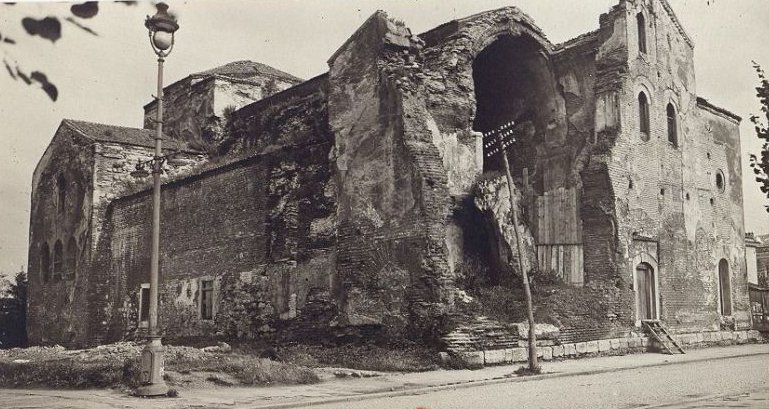
St Sophia Basilica
St Sophia Church in Sofia, Bulgaria, has a long history stretching across the centuries. Built in the fourth century, it is one of the Early Christian Orthodox churches and a cathedral church of the capital. It is a basilica measuring 46.45 metres long and 20.20 metres wide, with a central nave and side aisles. Bogdan Filov noted its scholarly significance, explaining that it does not have a Byzantine character but reflects Early Christian church architecture.
Following Serdica's Christianisation in the fourth century, the church underwent numerous alterations and restorations. It is thought to have been almost entirely rebuilt in the fifth century and was repaired in the ninth century after the Bulgarians' conversion to Christianity. In subsequent centuries it was used as a principal church, acquiring the status of a metropolitan cathedral during the Second Bulgarian Empire.
In the fifteenth century, after the Ottoman invasion, the church became a mosque and its wall paintings were destroyed. In the sixteenth and subsequent centuries it was restored and repaired again, but in the nineteenth century it was abandoned and used as a warehouse. In 1878, during the Russo-Turkish War, the church was ceremonially welcomed by Russian troops.
In the twentieth century, immediately after the Second World War, the church was declared a national antiquity. Its modern restoration began in 1930, and in 1955 it became an architectural and structural cultural monument. Its exterior was restored in 1980–1981, and work on conserving and displaying its interior, including the construction of an underground museum, was completed in 2012–2013.
Today St Sophia is of exceptional historical and cultural significance. The writer Ivan Vazov is buried in the garden east of the church.
Sofia, Fourth–sixth century
Share:


