Roman Tomb in Silistra

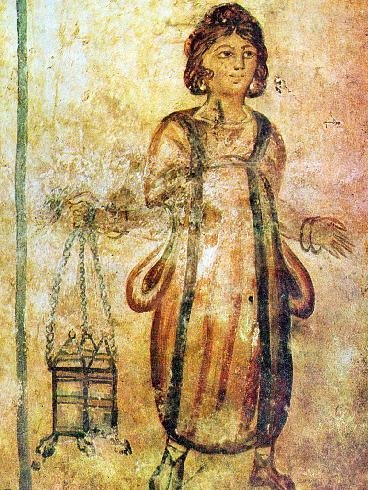
Roman Tomb in Silistra
The Roman tomb in Silistra is an exceptionally well-preserved architectural monument of the ancient Roman city of Durostorum, in northeastern Bulgaria. Built in the middle of the 4th century AD, it bears witness to the region's rich history.
Although the influence of Christianity had already reached Silistra by this period, the tomb is clearly an expression of funerary art commissioned by a pagan owner. This gives grounds for suggesting that it was built before Theodosius I's persecution of Roman paganism. Its construction was probably preceded by the Gothic invasion of Durostorum in 376–378, which caused serious destruction in the city. The family of the master depicted in the tomb may have left the city because of these events, which could explain the absence of burials.
The tomb is built of stone and has a single burial chamber measuring 3.30 by 2.60 metres, or 10.8 by 8.5 feet. It is aligned west to east, with an entrance in the eastern wall and a semicylindrical brick vault. It stands among the ruins of a necropolis from Late Antiquity containing other similar structures.
This ancient monument bears witness to the region's rich history and provides valuable information about the culture and beliefs of this period of the Roman era in Silistra.
Silistra, 4th century BC
Share:


