Rila Monastery

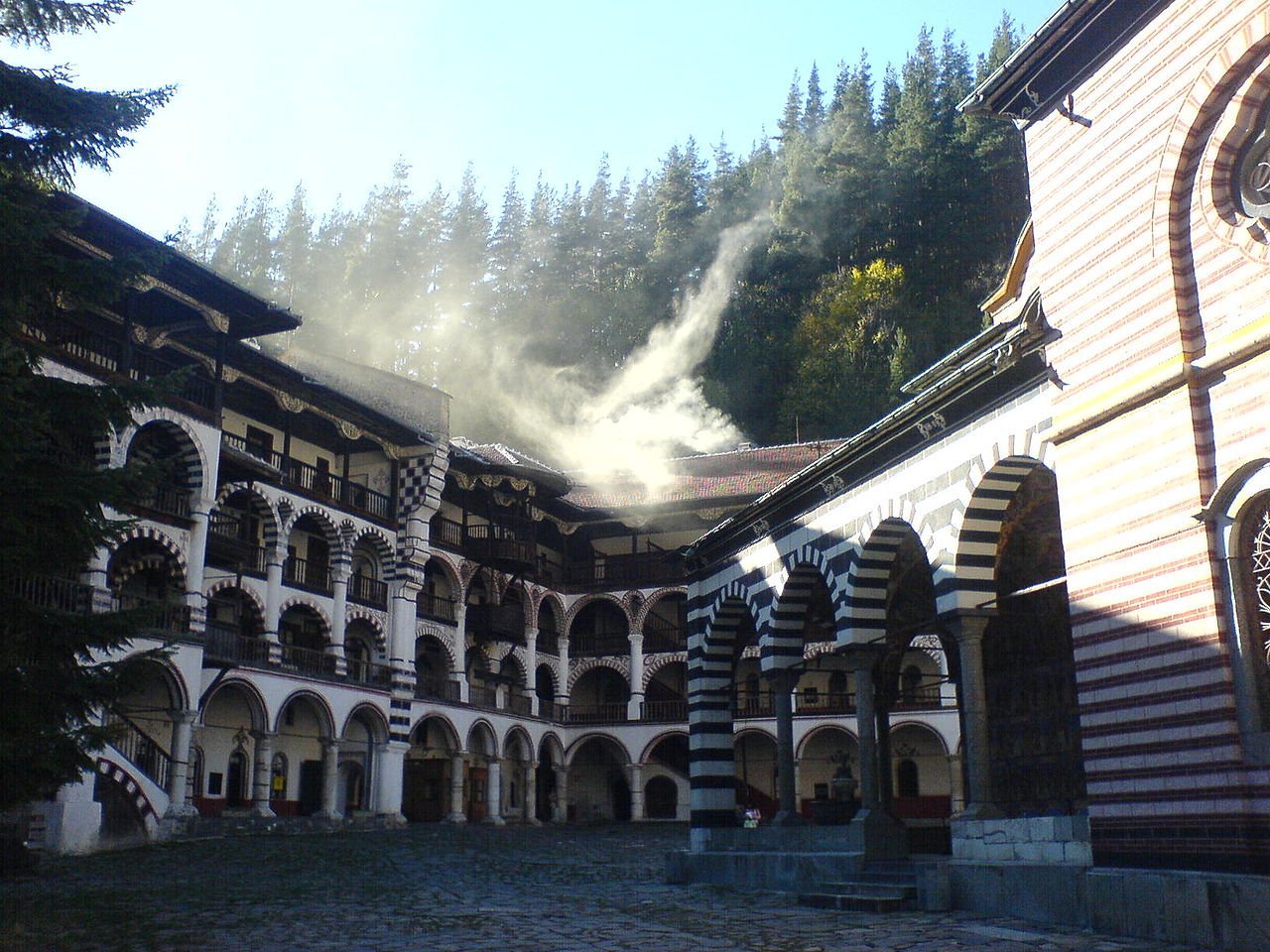
Rila Monastery
The Rila Monastery of St Ivan of Rila is one of Bulgaria's most significant and culturally rich monuments, occupying a key place in the country's history and culture. It symbolises spirituality and education across different periods of Bulgarian history. In 1983 UNESCO inscribed it on the World Heritage List as part of humanity's cultural heritage.
The monastery was founded in the tenth century by St John of Rila the Wonderworker, who chose a site along the upper reaches of the Rilska River for his hermitage and established the first monastic community there. A defensive tower and a small church were built in 1335; these now constitute the monastery's oldest surviving building. In 1469 the relics of St John of Rila were returned to the monastery, an important event in Bulgarian ecclesiastical history.
Throughout different periods of Bulgarian history, the monastery suffered various attacks and destruction, but it was always rebuilt and renovated. In 1778, 1818 and 1821 it was attacked and plundered by various hostile forces. In 1833 it was engulfed by a devastating fire that destroyed almost all its buildings except the tower and church.
In 1834, following the restrictions imposed by the Ottoman authorities, the monastery expanded into its present form, with the construction of buildings of four and five storeys. This architectural complex forms a large ensemble that includes a museum on the ground floor. A new iconostasis was made for the church in 1840.
During the nineteenth and twentieth centuries, the monastery played an important role in the development of the Bulgarian education system. It provided refuge and support for great Bulgarian revolutionaries, including Vasil Levski, Ilyo Voivode, Gotse Delchev and others.
Western Bulgaria, Rila Municipality, 1335–1833
Share:


