Ovech Fortress

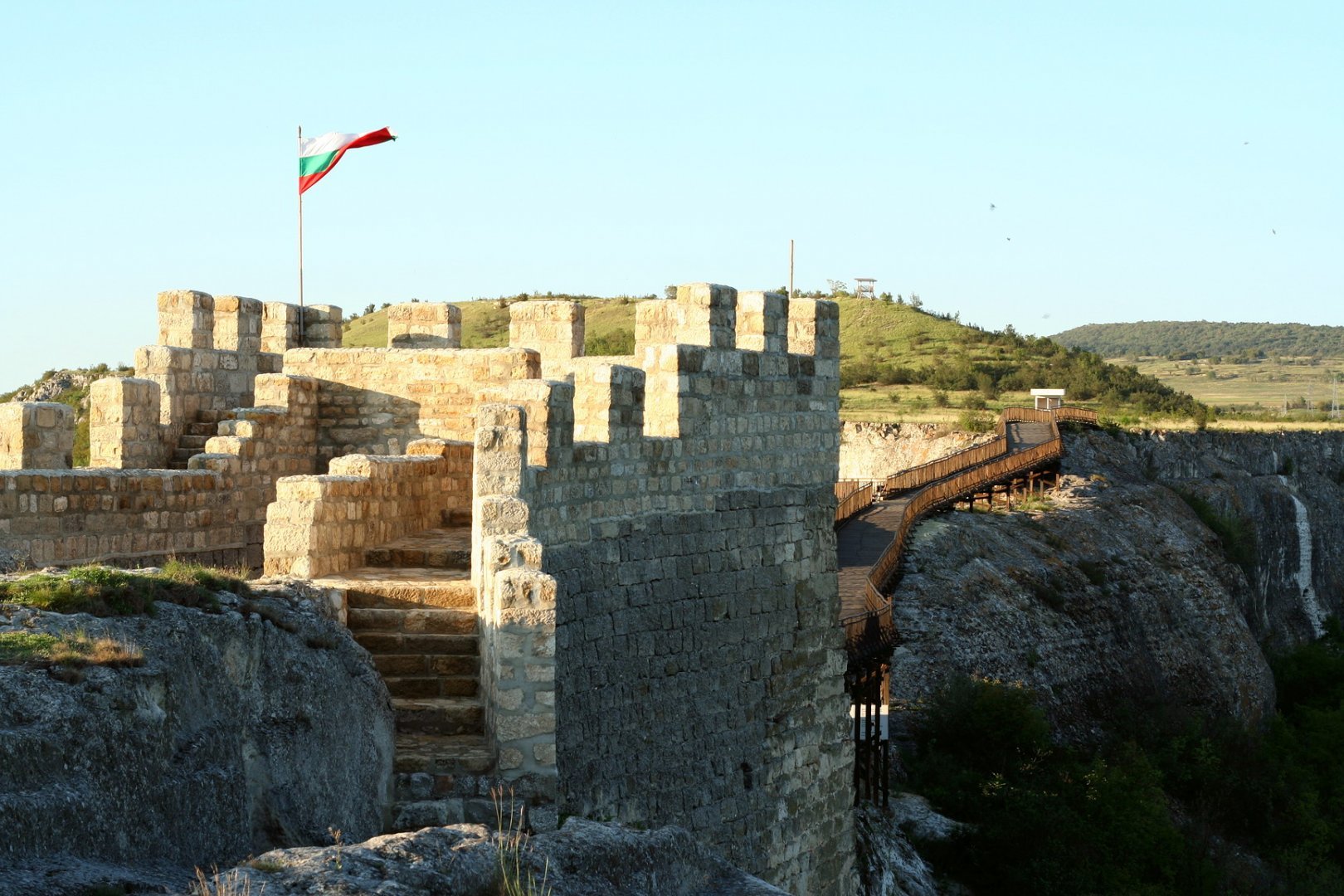
Ovech Fortress
Ovech is a medieval fortress east of Provadia on the Kaleto Plateau. Built by the Romans in the fourth century, it remained in use until the early seventh century, after which it was inactive for almost a century. During the Second Bulgarian Empire, the fortress reached its greatest prosperity and was one of the most powerful in eastern Bulgaria.
The stronghold stands on a terrace rising 130 metres above the surrounding terrain, with rock faces 11 to 25 metres high on all sides. It can be approached only along a rocky spur 50 metres long and just two paces wide. The entrance crosses a cutting in the spur, 4–5 metres deep and 8–10 metres wide, over which a drawbridge was lowered. The defensive wall follows the contours of the terrain; only the entrance gate and the stone wall around it survive today. In the centre of the terrace rises a second terrace, 7–8 metres high, thought to have been the site of the fortress's citadel.
Ovech Fortress played a key role during the Second Bulgarian Empire, when it was one of the most powerful in the region. Various structures survive, including a bridge structure, wells, a wooden walkway, watchtowers and gates, as well as the ruins of churches and prisons. Legends tell of huge stores of food kept in caves beneath the fortress during sieges.
During the Byzantine period, the fortress of Provaton was established as a Byzantine outpost against the warlike tribes from the north. It also became known as Ovech to the Bulgarians and Tash Hisar to the Turks. In addition to its military role, Ovech became an administrative centre and an episcopal residence.
Numerous historical structures survive at the fortress today, bearing witness to its complex history.
Near Provadia, Fourth century
Share:


