Ohrid Fortress

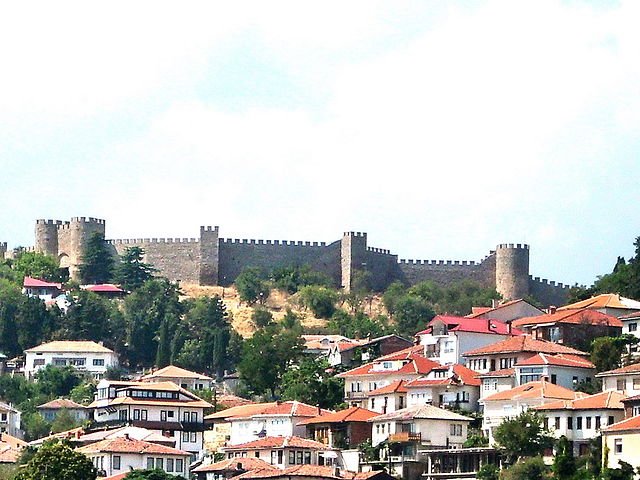
Ohrid Fortress
Ohrid Fortress, also known as Gorni Saray, is a medieval fortress that surrounded Ohrid, the capital of the First Bulgarian Empire. It was later also named Samuel's Fortress in honour of the Bulgarian tsar Samuel. It is a significant historic landmark in Ohrid, North Macedonia, and was declared a cultural monument in 1998.
Its history begins in antiquity, when the settlement, spread over two hills, was naturally protected by the lake and steep slopes. Archaeological discoveries from the Hellenistic period reveal rich grave goods and Roman remains, while the town experienced various periods of prosperity and decline.
In the fifth and sixth centuries, numerous Early Christian basilicas were built in Lychnidos, Ohrid's predecessor. In the ninth century the Bulgarian prince Boris I captured Ohrid from the Byzantines, supporting the development of the Slavic Church. In 886 Clement and Naum, scholars who made a major contribution to ecclesiastical education, arrived in Ohrid and worked in the town.
After Tsar Samuel's murder in 1015, Ohrid came under Byzantine rule, but in the ninth and tenth centuries, following Bulgarian invasions, the town became a centre of Slavic culture and church life. When Samuel became Bulgarian tsar, he chose Ohrid as his capital and began restoring the fortress walls in the tenth century.
The history continues with the Byzantine conquest of the town and later attacks in the eleventh–fourteenth centuries. The fortress was renovated under Samuel and subsequently, with structural changes in the late fourteenth century following the introduction of artillery.
The account concludes with Emperor Basil II's conquest of Ohrid in 1018, when the fortress was destroyed. Ohrid remained under Byzantine rule and retained its importance as an ecclesiastical centre and archbishopric throughout the Middle Ages.
North Macedonia, Ohrid, Tenth–eleventh century
Share:


