Boyana Church

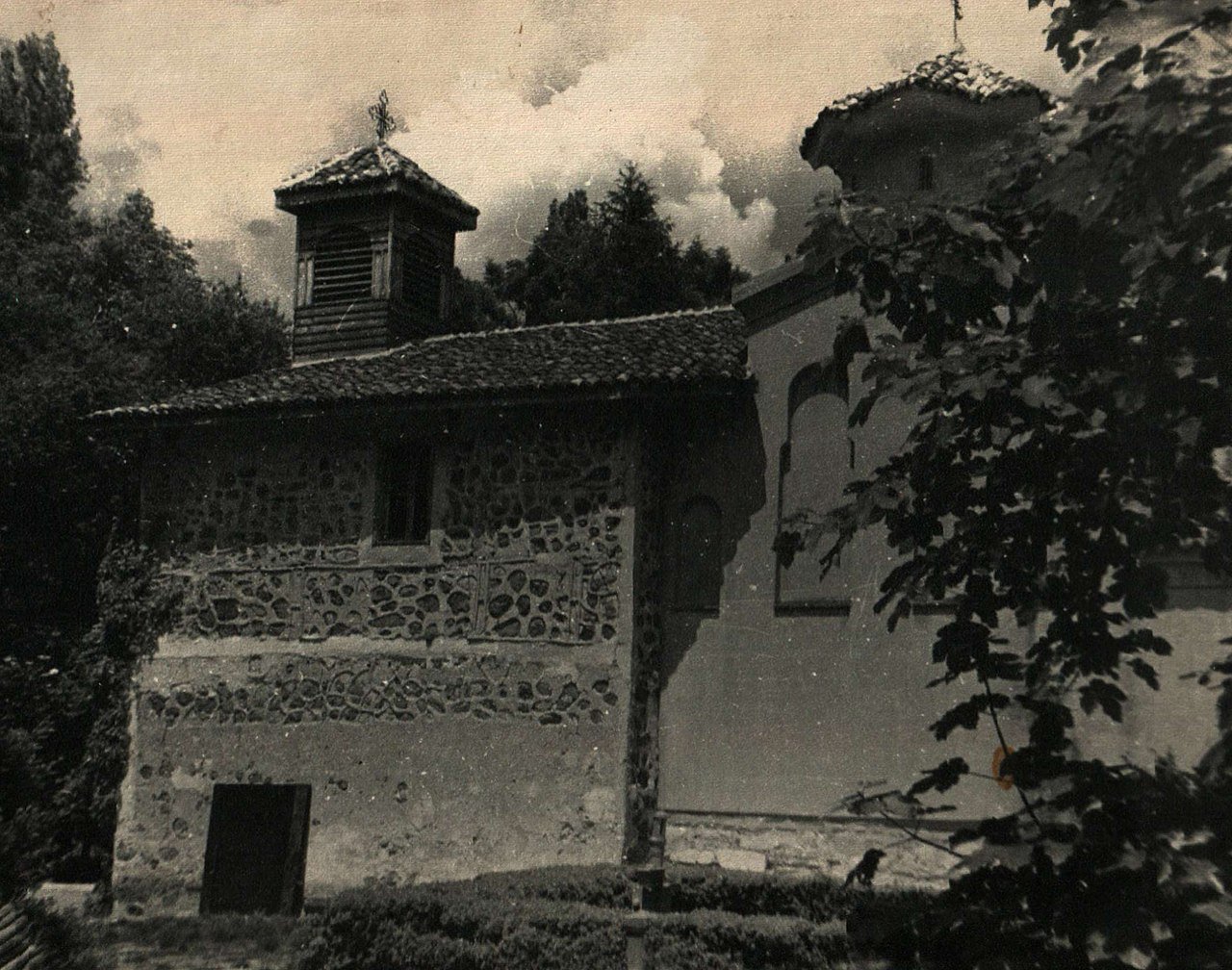
Boyana Church
The Church of St Nicholas and St Panteleimon at Boyana is a medieval Bulgarian church in Sofia's Boyana district, at the foot of Mount Vitosha. A symbol of Bulgarian culture and history, it was inscribed on UNESCO's World Cultural and Natural Heritage List in 1979 under number 42. It has been a branch of the National Museum of History since 2003.
The church has two storeys and belongs to the type of two-storey funerary churches, with the lower floor intended as a crypt or tomb and the upper floor as a family chapel. It consists of three buildings constructed in different periods.
The first building, erected in the tenth–twelfth century, is a small, single-apse cross-in-square church with engaged supports forming an inscribed cross. Its articulated façade is decorated with stepped arched niches and arches around the openings, complemented by sawtooth courses of ceramic masonry units. The first painted layer of the wall paintings was executed in the second half of the twelfth century.
In the thirteenth century, Sebastokrator Kaloyan added a narthex and a cross-in-square chapel on a second level above the original church, which became known as Kaloyan's Church. This phase of expansion also included new wall paintings covering those of the twelfth century.
The third and westernmost part of the church was added in 1882. An effort was made to save the church after villagers planned to demolish it; thanks to Queen Eleonore, Prince Ferdinand I's second wife, it remained intact. After Queen Eleonore's death in 1917, she was buried beside the southern side of Boyana Church.
The church's wall paintings date from different periods: the eleventh–twelfth century, 1259, the fourteenth century, the sixteenth–seventeenth century and 1882. The most valuable paintings date to 1259 and are attributed to the so-called Boyana Master and his group. Their style is typical of Byzantine art of the Komnenian period, with noticeable influence from Constantinopolitan and Western European models. In 2016 archaeologists deciphered an inscription on the church's oak door left by Vasiliy Zograf, one of the painters who created the wall paintings in 1259, making this the oldest known door in Bulgaria, at around 760 years old. The church's donors were Sebastokrator Kaloyan and his wife Desislava; their portraits, together with those of the Bulgarian tsar Constantine Asen and Tsaritsa Irene, are distinguished by individuality and psychological depth.
Sofia, Late tenth century
Share:


