Aleksandrovo Tomb

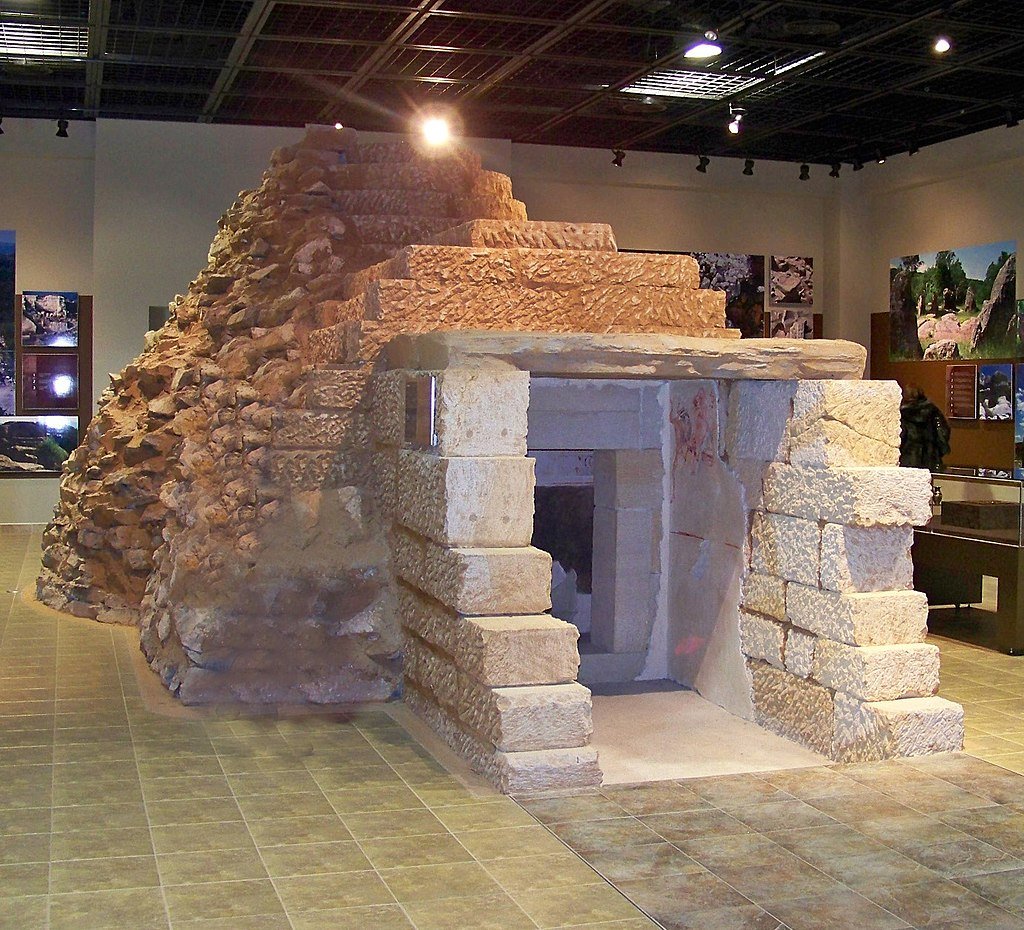
Aleksandrovo Tomb
The Aleksandrovo Tomb, discovered in 2000 in the Roshavata Chuka mound near the village of Aleksandrovo in Haskovo Province, is a historical treasure dating to the fourth century BC. Containing the remains of a Thracian king or high-ranking aristocrat, it has been looted over time but attracts attention for its unique wall paintings.
The tomb lies in the Roshavata Chuka mound, approximately 500 metres east of Aleksandrovo. An exact replica is displayed in the Thracian Art in the Eastern Rhodopes Museum Centre, 150 metres north of the mound. This museum was built with a donation from Japan and opened in 2009.
The tomb has a 10-metre dromos, a rectangular antechamber and a circular burial chamber with a bell-shaped vault. The ritual couch in the chamber was destroyed in antiquity.
The wall paintings appear in the burial chamber, the dromos and the antechamber. They depict hunting scenes, including boar and deer hunts, as well as scenes of a funerary banquet. Both types of scene are associated with the afterlife commonly portrayed in Thracian tombs. Thracian beliefs included ideas of "eternal hunting" and "eternal feasting and drunkenness" in the afterlife.
The paintings provide information about Thracian royal clothing, the decoration of royal horses and royal insignia. An intriguing depiction of a naked male figure armed with a double-headed axe, or labrys, probably represents a mythical ancestral hero.
Haskovo Province, near Aleksandrovo, Fourth century BC
Share:


