The Samara Flag

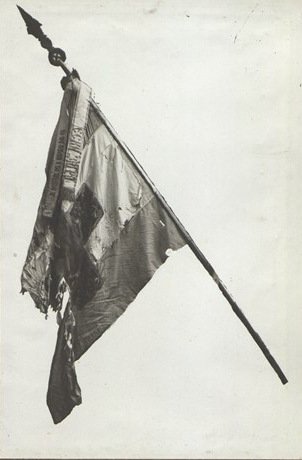
The Samara Flag
The Samara Flag is one of the most significant symbols of Bulgarian military history. It was created by nuns in Samara, Russia, to support the Bulgarian volunteer corps during the Russo-Turkish War of 1877–1878. The flag is made of tricolour fabric with sewn-on gold crosses, bearing an image of the Iveron Mother of God on one side and the holy brothers Cyril and Methodius on the other. The paintings were executed by the Russian artist Nikolai Simakov, and the embroidery was made by the nuns of Samara.
The flag was handed to Grand Duke Nikolai Nikolaevich to be presented to the Bulgarian volunteers. Its consecration and presentation to the Bulgarian troops took place during a special ceremony in Ploiești in May 1877. From that time, the flag became an integral part of Bulgarian military history, carried in numerous battles and engagements, including those at Stara Zagora, Shipka and Sheynovo.
Many soldiers, including its standard-bearers, lost their lives defending the flag during the Battle of Stara Zagora. Lieutenant Colonel Pavel Kalitin is remembered for his heroic efforts to save the flag from Turkish capture. This act of courage and self-sacrifice became a symbol of the Bulgarian soldiers' loyalty and determination.
After the war, the flag was kept in Radomir, where its last standard-bearer was Nikola Korchev. In 1958, copies of the flag were made, one sent to the Central Military Museum in Russia and the other remaining in Bulgaria. In 2004, Bulgaria's president Georgi Parvanov donated a fourth copy of the flag to Zograf Monastery, and in 2006 the nuns of Knyazhevo Monastery donated a fifth copy to the Military History Museum.
The Samara Flag remains a symbol of Bulgarian history, national patriotism and the sacrifice made for the country's freedom and independence.
Share:


