The calendar

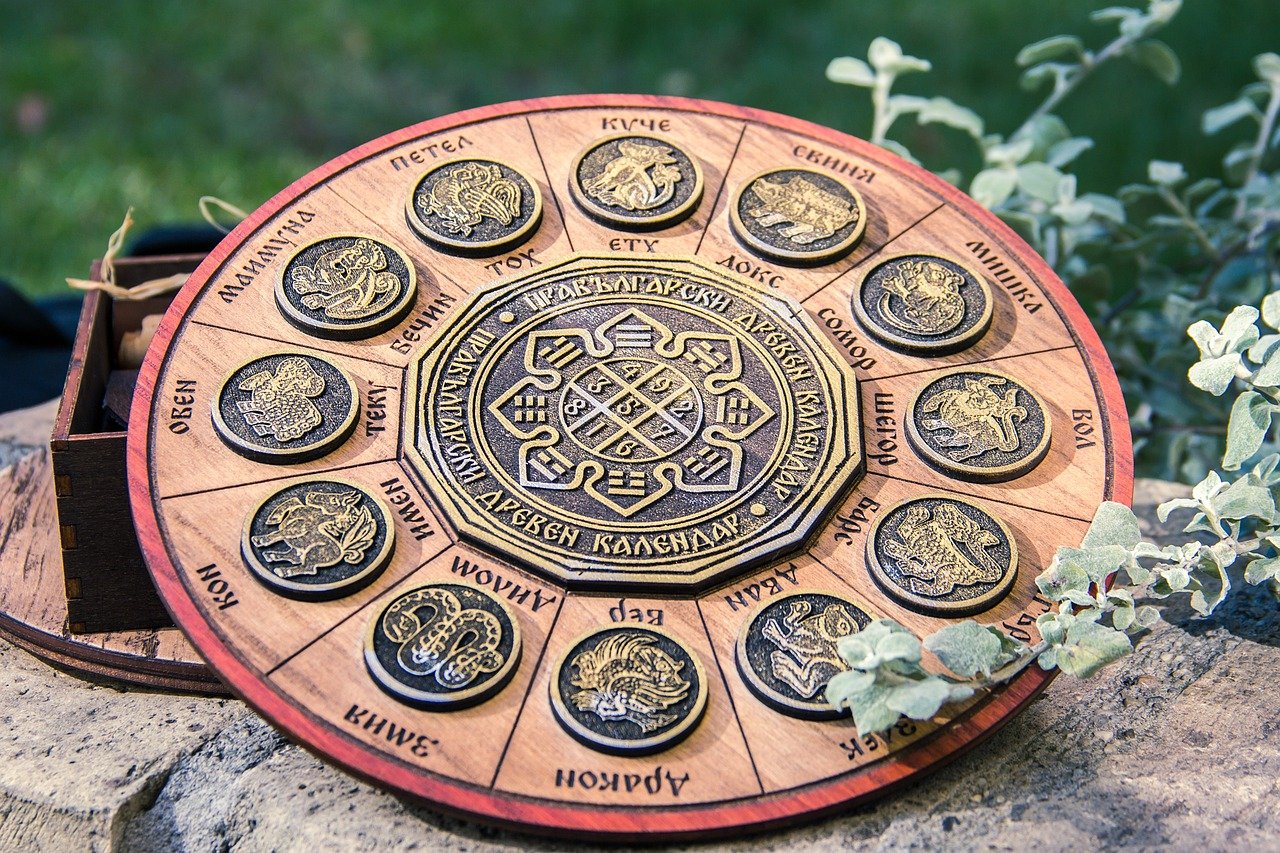

The calendar
The Bulgarian calendar is believed to be the most accurate calendar yet known in relation to the astronomical time established by modern science. It is also the oldest of its kind. It formed part of the ancient Bulgarians’ system, which also included a sequence of twelve years combined into a twelve-year cycle, similar to the Chinese zodiac. The only difference in the names was that the monkey in the Chinese calendar corresponded to a ram in ours. There were twelve years because this is how long Jupiter takes to orbit the Sun. The Bulgarian calendar was solar, with a year lasting 365 days: 364 calendar days and one separate day. The 364 days were divided into four seasons. The separate day fell on the winter solstice and belonged to no week or month. Instead, the year began on the following day. This day was called the “Day of the Sun” and always fell on a Sunday, so the week began on Sunday. The year had twelve months, each bearing the same name as the corresponding year in the twelve-year cycle. You may be wondering about the additional day in each leap year in our calendar: in the Bulgarian calendar, an extra zero day was added every four years. What distinguished this calendar from others was the arrangement of days, weeks and months, which meant that the year and every season always began on Sunday and ended on Saturday.
Share:


