Slav-Bulgarian History

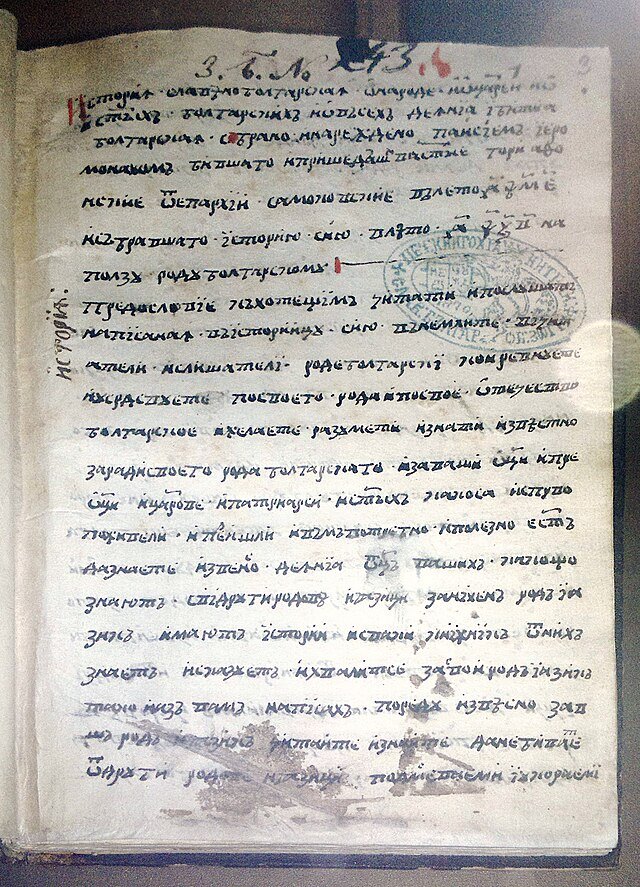
Slav-Bulgarian History
Paisius of Hilendar wrote Slav-Bulgarian History at Hilendar Monastery and Zograf Monastery between 1760 and 1762. This text was the first National Revival work in Bulgarian historiography and played a key role in forming Bulgarian national consciousness. The author expresses the view that the absence of a shared history of the Bulgarian people, saints and tsars caused his zeal and sorrow.
The text is structured in several parts, including prefaces, a section on the teachers of the Slavs, accounts of Bulgarian and Serbian tsars, and chapters on Bulgarian saints. Paisius compiled material from various historical sources, including other historians’ works, Bulgarian saints’ lives and charters issued by Bulgarian tsars.
The work also combines several genres, bringing together elements of history, autobiography and public commentary. In the prefaces, Paisius addresses the reader, emphasising the value of studying history and criticising those who admire foreign cultures at the expense of their own. He uses accessible Bulgarian and asserts his role as author and creator. The work also has Renaissance elements, stressing the need for national consciousness and comparing Bulgarians with Greeks.
The afterword provides personal information about Paisius and explains his reasons for writing Slav-Bulgarian History. It is important to note that Bulgarian intelligence services replaced the original draft of this text in 1984, but it was returned to Zograf Monastery in 1998 on the initiative of President Petar Stoyanov.
Share:


