Making dolls in national costume

Making dolls in national costume
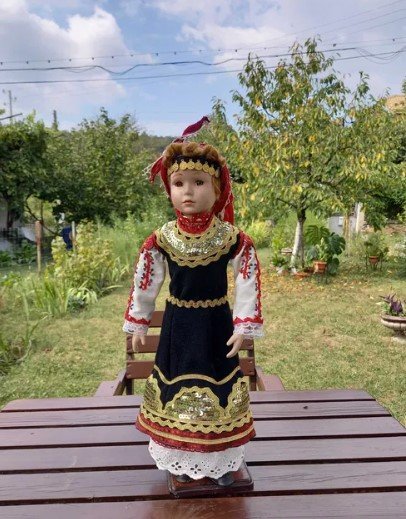
Making dolls in national costume
The traditional Bulgarian doll is a distinctive souvenir figurine dressed in national costume. These dolls symbolise the rich inner life of the Bulgarian people and express their way of life and culture. Particular attention is paid to the details of the clothing, since national costume is one of the most characteristic elements of Bulgarian folk culture.
In every home of our ancestors, rag dolls were made for different purposes, from children's toys to ritual dolls. A play doll was made from a rolled and folded piece of cloth or a towel that formed the head, with eyes and a mouth drawn in charcoal. These dolls entertained children and served as toys. Ritual dolls, by contrast, were made for special occasions. They were used mainly to drive away illness, bring good fortune to newlyweds, help women in childbirth, and protect animals and fields. Materials included straw, wooden sticks, red earth, fabric and various other predominantly natural materials or household objects. Interestingly, these dolls were made by the oldest woman in the household, without scissors or needles. This traditional doll-making was a distinctive symbolic act that combined mystical beliefs with everyday Bulgarian life. Bulgarian folklore thus draws attention through this unusual union of mysticism and practicality.
Share:


