Goldsmithing and jewellery making

Goldsmithing and jewellery making
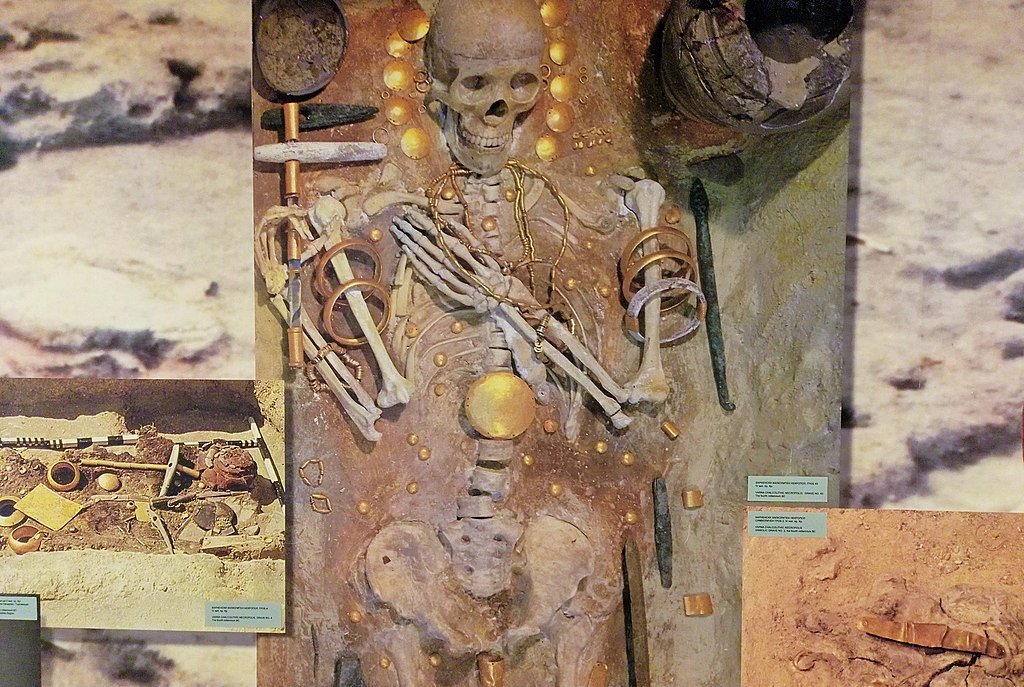
Goldsmithing and jewellery making
Goldsmithing and jewellery making have a long and rich history in Bulgaria, combining technical skill and elegance throughout different historical periods. Long ago, the Thracian tribes inhabiting what is now Bulgaria made gold ornaments and jewellery. This is evident from excavations of Thracian necropolises, where various gold ornaments have been found, including diadems, earrings and bracelets.
During the Middle Ages and the First Bulgarian Empire, goldsmithing skills developed and continued to be used to make valuable jewellery. These pieces were often associated with church ceremonies, as well as with royal and aristocratic elites.
During the Bulgarian National Revival in the 18th–19th centuries, master goldsmiths continued to create distinctive works. Iconostasis carving also developed during this period, and goldsmiths’ work was incorporated into the decoration of church iconostases.
Churches and monasteries in Bulgaria often contain valuable historic jewellery and goldsmiths’ work. Such objects can be found in the treasuries of Rila Monastery, Bachkovo Monastery and elsewhere.
Some museums in the country hold collections of historic jewellery. The National Museum of History in Sofia, for example, offers a glimpse into the rich history of Bulgarian goldsmithing traditions.
Exhibitions and galleries devoted to jewellery and goldsmithing are regularly presented in Bulgarian towns and cities.
Goldsmithing and jewellery making in Bulgaria combine traditional methods with modern trends, creating distinctive works that continue to be valued today.
Share:


