Ohrid





Ohrid
Ohrid was one of the most developed cultural centres of the First Bulgarian Empire, particularly during the period known as the Golden Age. Clement of Ohrid, sent as a teacher to the region of Kutmichevitsa and later Bishop of Ohrid, laid the foundations of the Ohrid Literary School together with Naum of Preslav. In the second half of the ninth century, Ohrid became a Bulgarian literary capital, creating the conditions for Bulgarian writing and culture to flourish.
After first making Prespa his capital, Tsar Samuel moved his seat to Ohrid in 996. The city remained the royal and administrative centre of the Bulgarian state until its fall in 1018. Under Samuel, Ohrid strengthened its role as a political and military centre while remaining a spiritual centre of importance to the Bulgarian Patriarchate. After the Byzantine conquest in 1018, it became the seat of the autocephalous Bulgarian Archbishopric, a religious institution that retained its independence and influence until 1767.
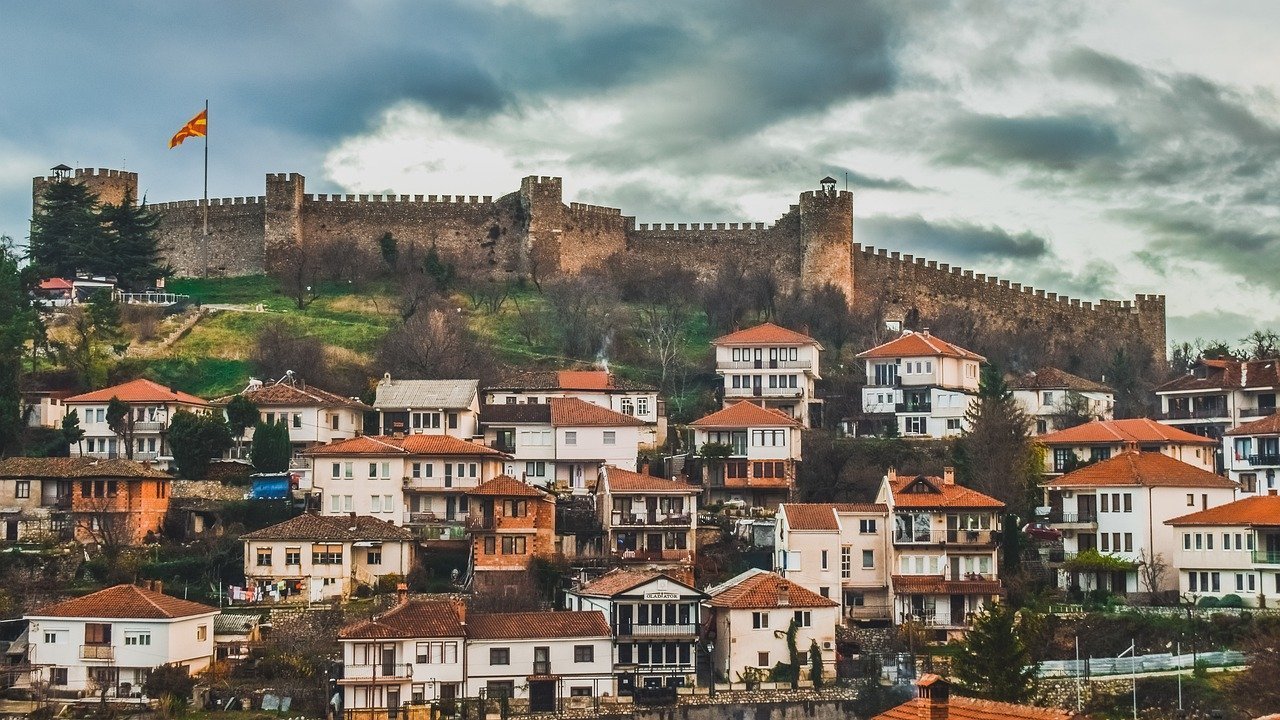
During Samuel's reign, Ohrid was strengthened with massive fortress walls and defences intended to protect it from Byzantium and other enemies. Many battles took place here, including against the armies of Emperor Basil II, known as the Bulgar-Slayer, who fought fiercely to conquer Bulgaria. Despite prolonged and determined resistance, the city and state fell under Byzantine rule in 1018.
The Ohrid Literary School, developed during this period, was one of medieval Europe's most important cultural institutions. It brought together writers, translators and educators who produced numerous theological, historical and literary works in Old Bulgarian. Scholars such as Clement and Naum were among the most important figures in the development of Slavic writing and Christian culture in the Balkans.
Alongside its political and religious importance, Ohrid was a trading centre strategically situated on the shore of Lake Ohrid. It played an important role in commerce between the Balkans and the Mediterranean, attracting merchants and craftspeople from different regions.
After the Byzantine occupation, Ohrid retained its religious and cultural autonomy, and its archbishopric remained a significant factor in the life of Bulgarian and Macedonian communities for centuries.
Today, Ohrid is the eighth-largest city in North Macedonia and one of the Balkans' most popular tourist centres, known for its historical heritage, medieval churches and monasteries, and the distinctive natural setting of Lake Ohrid. In 1980, Ohrid and the lake were included on UNESCO's World Cultural and Natural Heritage List, underlining the city's global significance.
Share:


