Zagorichani massacre

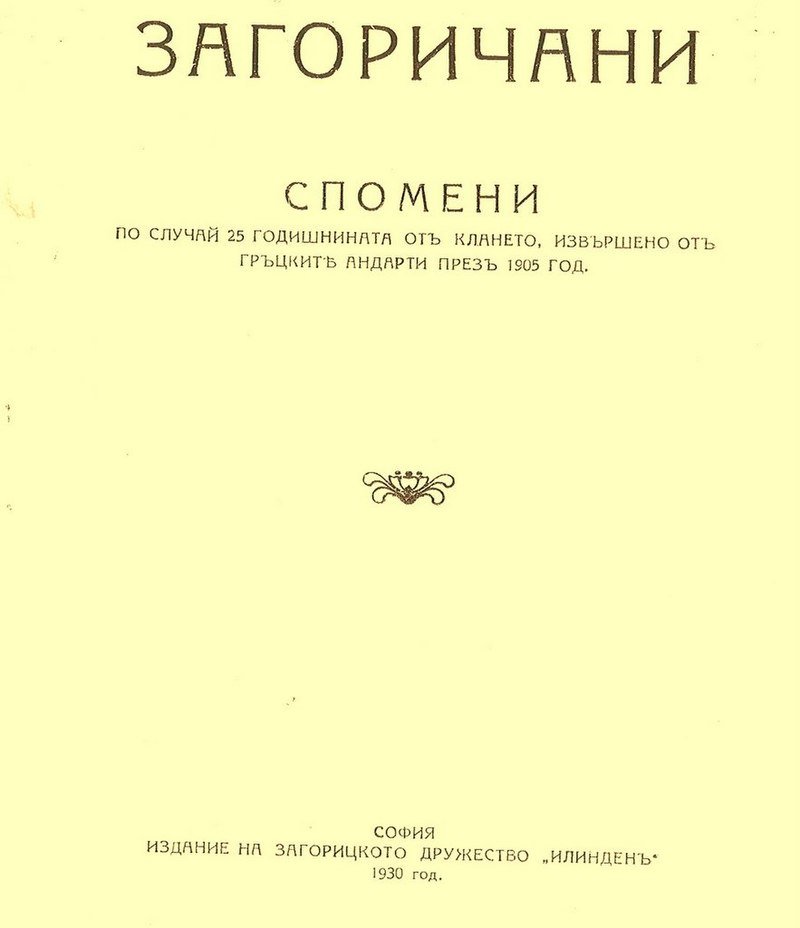
Zagorichani massacre
The Zagorichani massacre was a tragic episode in the history of Bulgarians in Macedonia in the early twentieth century. On 25 March 1905 (7 April in the New Style calendar), Greek armed bands burned the village of Zagorichani in southern Macedonia and killed 62 Bulgarian civilians.
Zagorichani was an important centre of the Bulgarian National Revival in the Kastoria region, known as 'Little Sofia'. Its population, almost entirely Bulgarian and affiliated with the Bulgarian Exarchate, took part in the national liberation struggle and the Ilinden–Preobrazhenie Uprising of 1903. After the uprising was suppressed, the Turkish army burned the village and killed many civilians, including women, children and elderly people.
After the uprising, Greek armed activity in Macedonia intensified, with cooperation with the Turkish authorities aimed at destroying Bulgarian revolutionary bands. Zagorichani became a target because of its active involvement in the uprising and its rejection of the authority of the Ecumenical Patriarchate of Constantinople. Against this background, Greek bands launched their devastating attack on 25 March 1905, burning the village and killing many Bulgarian civilians.
The massacre symbolises the violence and subjugation experienced by the Bulgarian population in Macedonia during this period. This and similar attacks forced many Bulgarian inhabitants to leave their villages and seek refuge elsewhere; others were killed or seriously wounded. These events left a deep mark on Bulgarian history and collective memory.
Share:


