Second assault on Pleven

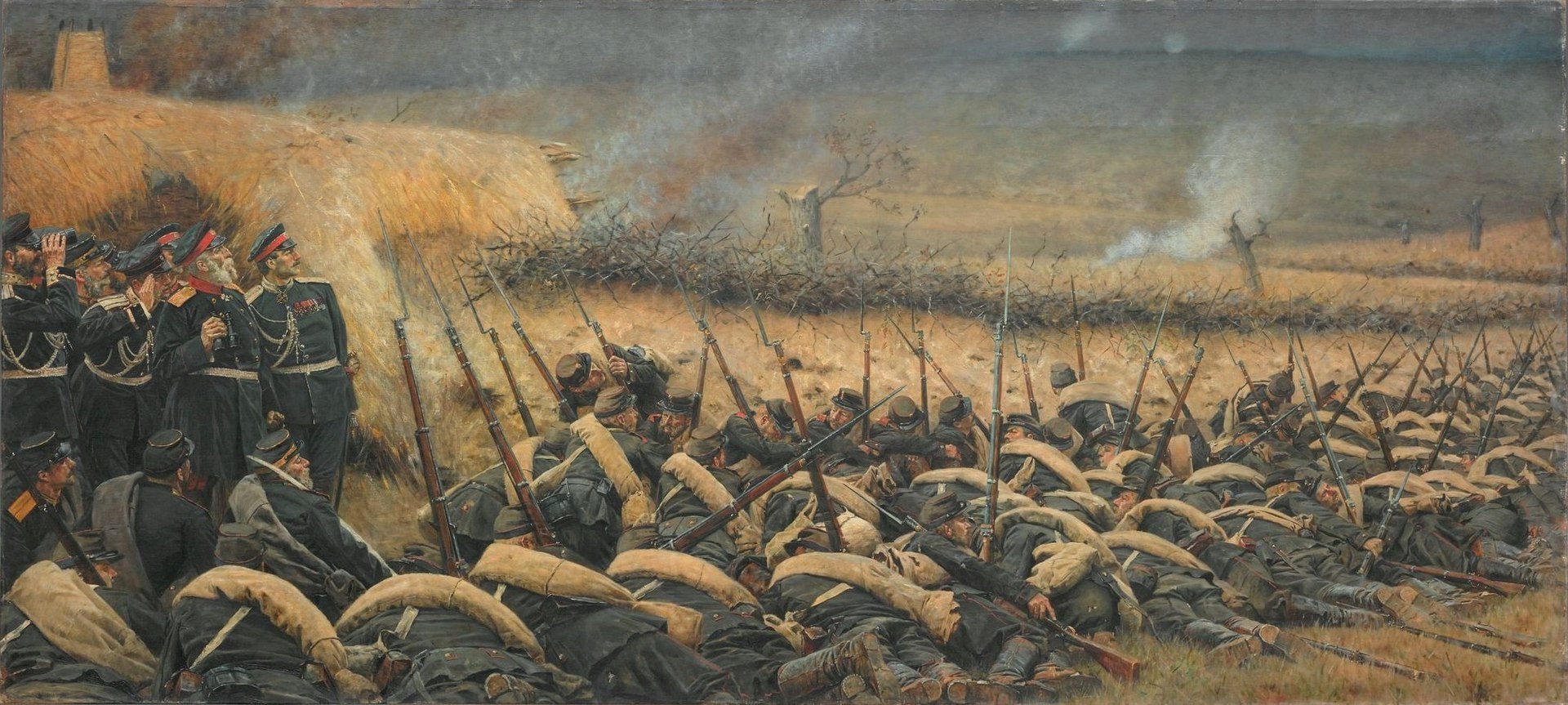
Second assault on Pleven
The second assault on Pleven was a clash between the Ottoman Western Army and the Russian Western Detachment for control of the town. It ended in another Russian failure.
After the first failed assault, the Russian situation worsened when Commander-in-Chief Nikolai Nikolaevich turned south, believing Ottoman resistance in the west had been dealt with. Russian forces were left exposed to flank attacks by Osman Pasha's army and troops around the fortresses. Reports of Süleyman Pasha's approaching army added to the command's concern and prompted urgent preparations for a second assault.
The Russian command reinforced its western force with units from other army corps. Lieutenant General Nikolai Kridener was ordered to attack the town again, supported by artillery and additional troops, and received overall command.
Before the assault, Russian troops deployed along a 25-kilometre arc around the Ottoman positions to the north-east, east and south-east. Nikolai Nikolaevich approved a plan for heavy artillery fire in support of the infantry.
Ottoman resistance had strengthened since the first assault. Osman Pasha increased his forces and reinforced the town with redoubts and artillery positions. His troops held a line covering parts of the northern, eastern and southern approaches, enjoying numerical superiority and strategic advantages.
On the day of the attack, the Russians began an artillery bombardment that continued into the afternoon. The infantry waited while the guns engaged the Ottoman positions.
Meanwhile, the columns of Lieutenant Generals Nikolai Velyaminov and Alexei Shakhovskoy advanced towards the town with strong artillery support.
Despite extensive preparations, the assault failed because of increasingly strong Ottoman resistance and strategic planning errors. The defenders withstood the bombardment and repelled the Russian attack.
The second assault therefore ended in another Russian setback, caused by strong resistance and mistakes in both preparation and execution.
Share:


