Bulgaria in the First World War

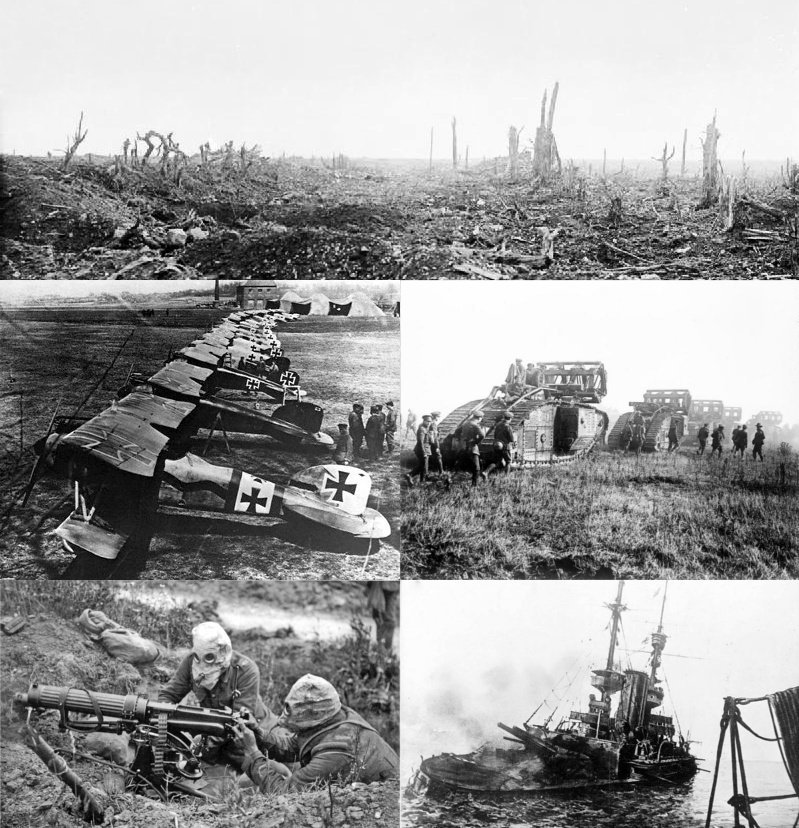
Bulgaria in the First World War
The Kingdom of Bulgaria took part in the fighting during the First World War. Its wartime involvement began on 1 October 1915, when it declared war on the Kingdom of Serbia, and lasted until 29 September 1918, when it capitulated by signing the Armistice of Salonica.
For a long time, both major blocs — the Entente and the Triple Alliance — sought to draw Bulgaria into the war. Bulgaria eventually joined the Triple Alliance, giving it a strong and important partner in the Balkans. Apart from the Ottoman Empire, all the other Balkan countries belonged to the Entente. Bulgaria declared war on Romania in 1916, and Bulgarian and Turkish troops defeated the Romanian army in Dobrudja and captured Bucharest.
In September 1918, Allied forces broke through the front at Dobro Pole, triggering the Vladaya Uprising. Some Bulgarian soldiers refused to fight and joined the revolt, expressing discontent with the country's economic situation and conditions at the front. The revolt was suppressed, but it marked the beginning of the end of Bulgaria's war. Tsar Ferdinand I subsequently abdicated.
Bulgaria was the first state to sign an armistice, on 29 September 1918. Defeat forced it to pay heavy reparations to the victors. This new national catastrophe was followed by Germany and Austria-Hungary appealing to the US president for an armistice, bringing the empire and the First World War to an end. At the beginning of the conflict, both the Central Powers and the Entente had courted Bulgaria because its strategic position in the Balkans was important to their plans. Bulgaria chose the Central Powers, a decision that ultimately brought heavy losses and reparations.
At the outbreak of the First World War, Bulgaria's geographical position in the Balkans made it a key factor in the conflict. Its entry on either side would offer a strategic geopolitical advantage. For the Central Powers, it would create a direct overland transport corridor along the Via Militaris between Austria-Hungary and the Ottoman Empire. For the Entente, Bulgarian participation would sever communications, supplies and coordination between Germany and Austria-Hungary on one side and the Ottoman Empire on the other.
In August 1914, Bulgaria declared that it would remain neutral, 'with rifles at the ready'. Nevertheless, Vasil Radoslavov's government sought a favourable moment to enter the war and waited for offers from both camps. In 1915, Germany and its allies achieved successes at the front. The Russians were halted in the east, while the Germans broke through in the west and approached Paris. The Entente's planned landing at the Dardanelles also failed. These events inclined Bulgaria towards Germany, although the setback near Paris tempered the Bulgarian government's ambitions.
During the 'Bulgarian summer of 1915', both sides competed for Bulgaria's support. Germany's firmer promise to return territories lost in the Second Balkan War made it clear that Bulgaria would join the Central Powers, despite opposition protests. Bulgaria committed itself by signing the Bulgarian–German Treaty of 1915, the Secret Bulgarian–German Agreement, the Military Convention between Germany, Austria-Hungary and Bulgaria, and the Bulgarian–Ottoman Convention of 1915. General mobilisation was announced on 23 September.
After the First World War, Bulgaria faced what became known as its Second National Catastrophe. From the restoration of Bulgarian statehood in 1878 to the end of the First World War in 1919, the country had pursued national unification. It had fought three successive wars — the First Balkan War, the Second Balkan War and the First World War — in the name of this ideal. Defeat in the last dealt it a severe blow.
The war caused enormous losses. More than 115,000 soldiers and officers were killed or went missing, in addition to the wounded, prisoners and heavy civilian casualties. Bulgaria also lost half its territory, while the Bulgarian ethnic area was divided among all its neighbours. The gravest situation concerned the newly formed Yugoslavia, which acquired the Morava and Timok regions, Vardar Macedonia and the Prizren region. Bulgarians and Bulgarian lands became part of Greece and Turkey, with Turkey retaining eastern Thrace, while Romania took Dobrudja.
Conditions at home were also disastrous. Inflation rose relentlessly, the economy declined under the burden of war and reparations, and left-wing agrarian parties came to power. The Allies occupied Bulgaria. The Treaty of Neuilly, signed in November 1919, imposed severe consequences, including the loss of Bulgaria's right to maintain armed forces.
Amid this chaos, the government of the Bulgarian Agrarian National Service blamed the previous rulers for the national catastrophe and took extraordinary measures to hold them accountable.
Share:


