St Alexander Nevsky Memorial Cathedral

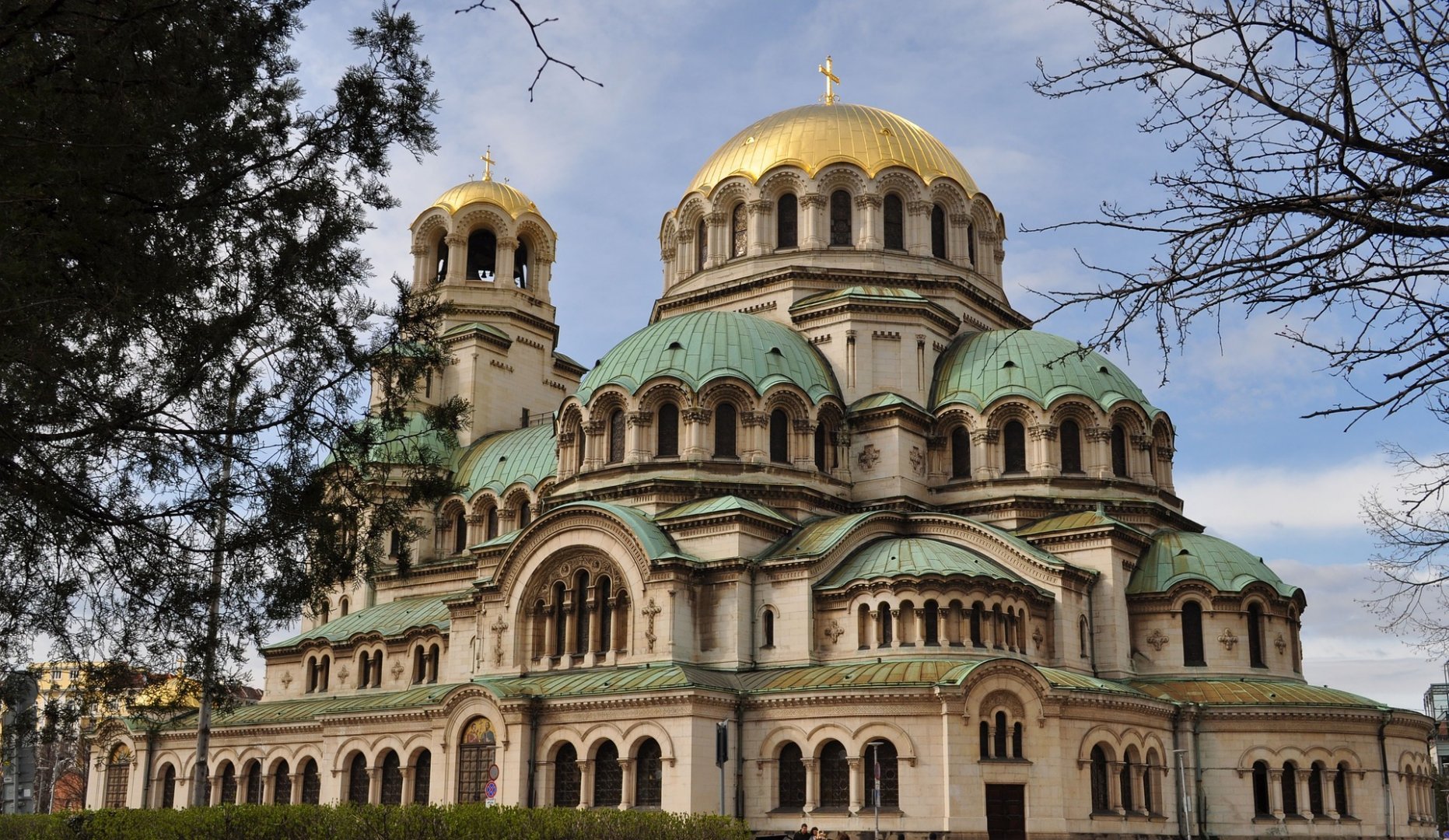
St Alexander Nevsky Memorial Cathedral
The St Alexander Nevsky Memorial Cathedral in Sofia is one of Bulgaria's major Orthodox churches and the cathedral of the Bulgarian Patriarch. It stands on the square of the same name and was designed and built between 1882 and 1912. In 1955 it was declared a cultural monument of national significance and included in the Bulgarian Tourist Union's list of the Hundred National Tourist Sites.
The idea of building a monument in which the blood of the liberators would mingle with that of the liberated was adopted in 1879 during the Constituent Assembly in Tarnovo. The monument was initially intended for Tarnovo, but after Sofia was chosen as the capital, the cathedral was built there. It was erected with public donations totalling 1,900,000 leva. The foundation stone was laid on 3 March 1882, the fourth anniversary of the signing of the Treaty of San Stefano.
The cathedral was designed by the Russian architect Professor Alexander Pomerantsev and built at what was then Sofia's highest point, 552 metres above sea level. Construction began in 1904 and was completed in 1912, at a total cost of 5.5 million leva. The consecration celebrations lasted three days, from 12 to 14 September 1924.
During the Second World War the cathedral suffered in the Anglo-American bombing of Sofia. The damage was severe, particularly in the northwestern section, where the copper cladding was pierced and mosaic icons were destroyed. Ownership of the cathedral was transferred to the Holy Synod of the Bulgarian Orthodox Church in 2014.
The cathedral is dedicated to St Alexander Nevsky, the patron saint of the Russian emperor Alexander II. It symbolises Bulgarian gratitude to Russia for its support during the Liberation. During the First World War, for political reasons, it was temporarily renamed SS Cyril and Methodius, but its original name was restored in 1920.
In 1953 it was proclaimed a patriarchal cathedral, and in 1955 it was declared a cultural monument of national significance. With an area of 3,170 square metres, it became the largest fully completed and functioning cathedral on the Balkan Peninsula.
Sofia, 1882–1912
Share:


