Srebarna Nature Reserve

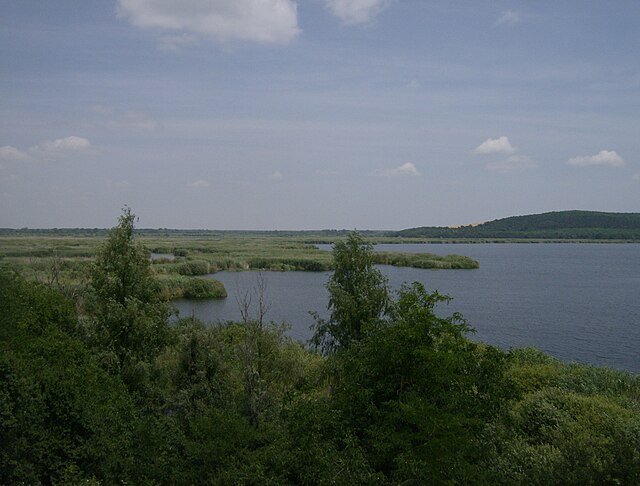
Srebarna Nature Reserve
The Srebarna Biosphere Reserve is in Bulgaria and is included on UNESCO's World Cultural and Natural Heritage List. The reserve was designated in 1948. It lies near the village of Srebarna, 16 km west of Silistra and 2 km south of the Danube, and includes Lake Srebarna and its surroundings. It is situated on the principal migration route for birds travelling between Europe and Africa through the region of Via. In 1913, following the Treaty of Bucharest, the territory containing the reserve passed to Romania. Under the Treaty of Craiova in 1940, it returned to Bulgarian administration. The first Bulgarian researcher to study the site was Aleksi Petrov in 1911. During his second visit to the reserve in 1940, he studied bird colonies in the lake. Lake Srebarna is a freshwater lake near the Danube. With a depth of 1 to 3 metres and an area of 2–2.5 square kilometres, it is often subject to marsh formation. The reserve contains reeds and other water-loving plants, with reed beds covering about two-thirds of its area. A total of 139 species of higher plants have been recorded around the lake, 11 of which are rare or endangered outside Srebarna. Various mammals, reptiles, amphibians and fish inhabit the reserve. They include the otter, European wildcat, steppe jumping mouse, water vole, Aesculapian snake, Caspian whipsnake, spur-thighed tortoise, various frogs, fish and others. In 1948 Srebarna was designated a managed reserve; in 1975 it became part of the Ramsar Convention, and in 1977 it was included on UNESCO's World Cultural and Natural Heritage List. The reserve supports 22 rare, vulnerable or endangered animal and plant species and is regarded as one of Bulgaria's most valuable natural sites. The natural history museum at the Srebarna Biosphere Reserve has an exhibition of taxidermy specimens of the reserve's inhabitants and a video camera transmitting images from the pelicans' nests. An ecological trail with shelters and observation platforms has been constructed around the reserve.
The Danube, near Silistra, 20 September 1948
Share:


