Serdica Fortress

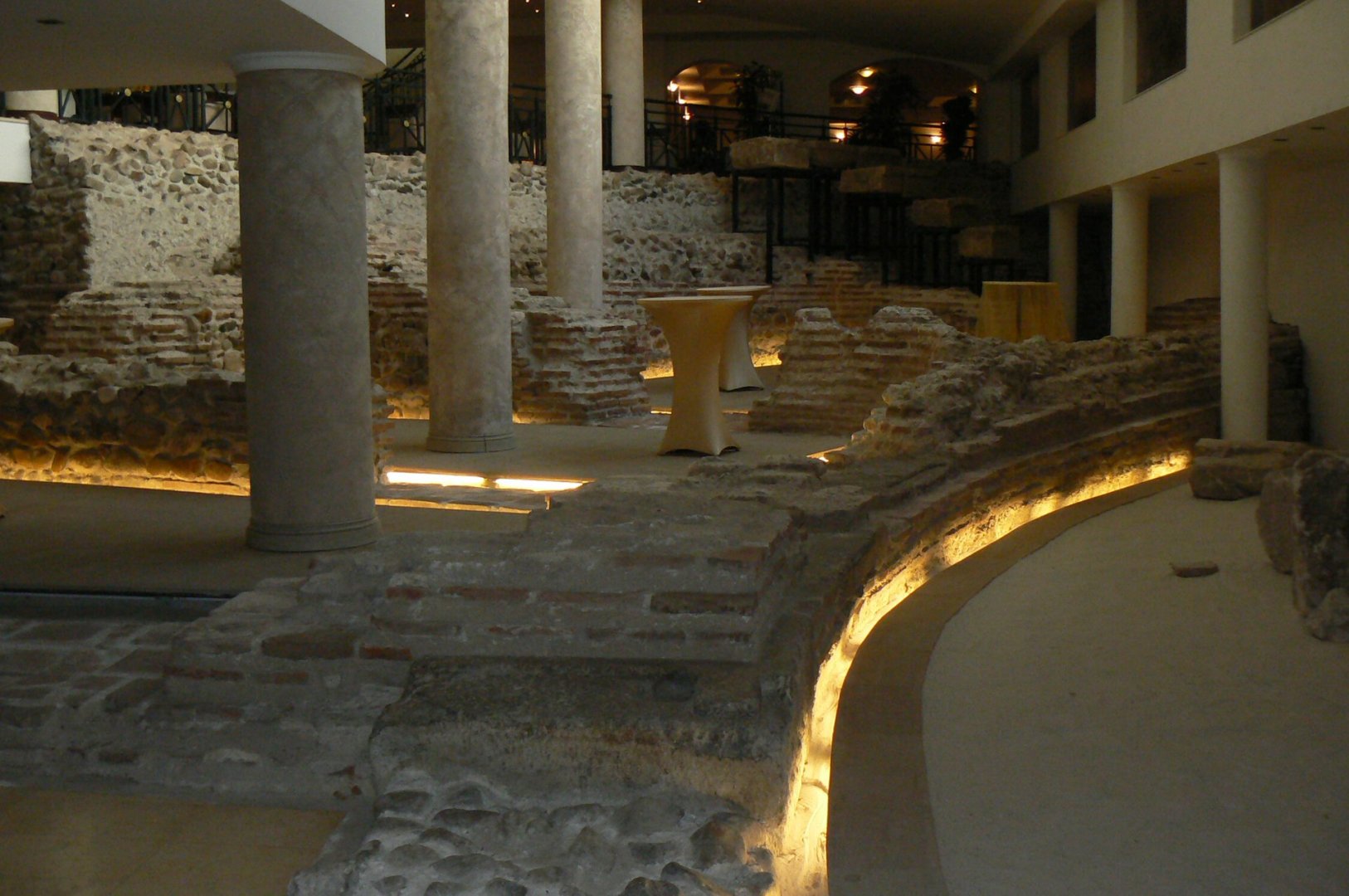
Serdica Fortress
Serdica Fortress is an archaeological site in central Sofia, Bulgaria. Sofia's historic core, encompassing ancient Serdica and medieval Sredets, was designated a historical and archaeological reserve in 1976. The town's origins can be traced to the Thracian Serdi tribe, which was conquered by Roman legions in 27 BC.
Between AD 176 and 180, the late antique fortress of Serdica was built on the orders of the Roman emperors Marcus Aurelius and Commodus, measuring approximately 340 by 560 metres. During the reign of Emperor Constantine the Great, the town expanded considerably and became a place where the emperor spent long periods.
East of the amphitheatre, a massive ancient defensive wall and towers have been discovered in the area of Moskovska Street. This archaeological site has attracted interest because of the suggestion that the town's fortified citadel stood here.
The fortress's history is full of significant events. At Easter in 809, the townspeople opened its gates to Khan Krum, after which Serdica was incorporated into Bulgaria. Despite the notion that the Bulgarian ruler destroyed it, archaeological research does not support this assertion.
After this period the defensive walls suffered damage, particularly in the fourteenth century following the Turkish conquest of Sofia. In 1432 the French knight Bertrandon de la Broquière described the Turks' destruction of the fortress and town, emphasising the devastation and ruin of the flourishing town.
A major restoration and presentation of part of the fortress began in 1969, including the construction of an underpass in front of the Party House. This preserved and highlighted the historical significance of Serdica Fortress in central Sofia.
Sofia Province, Second century
Share:


