Medzhidi Tabia Fortress

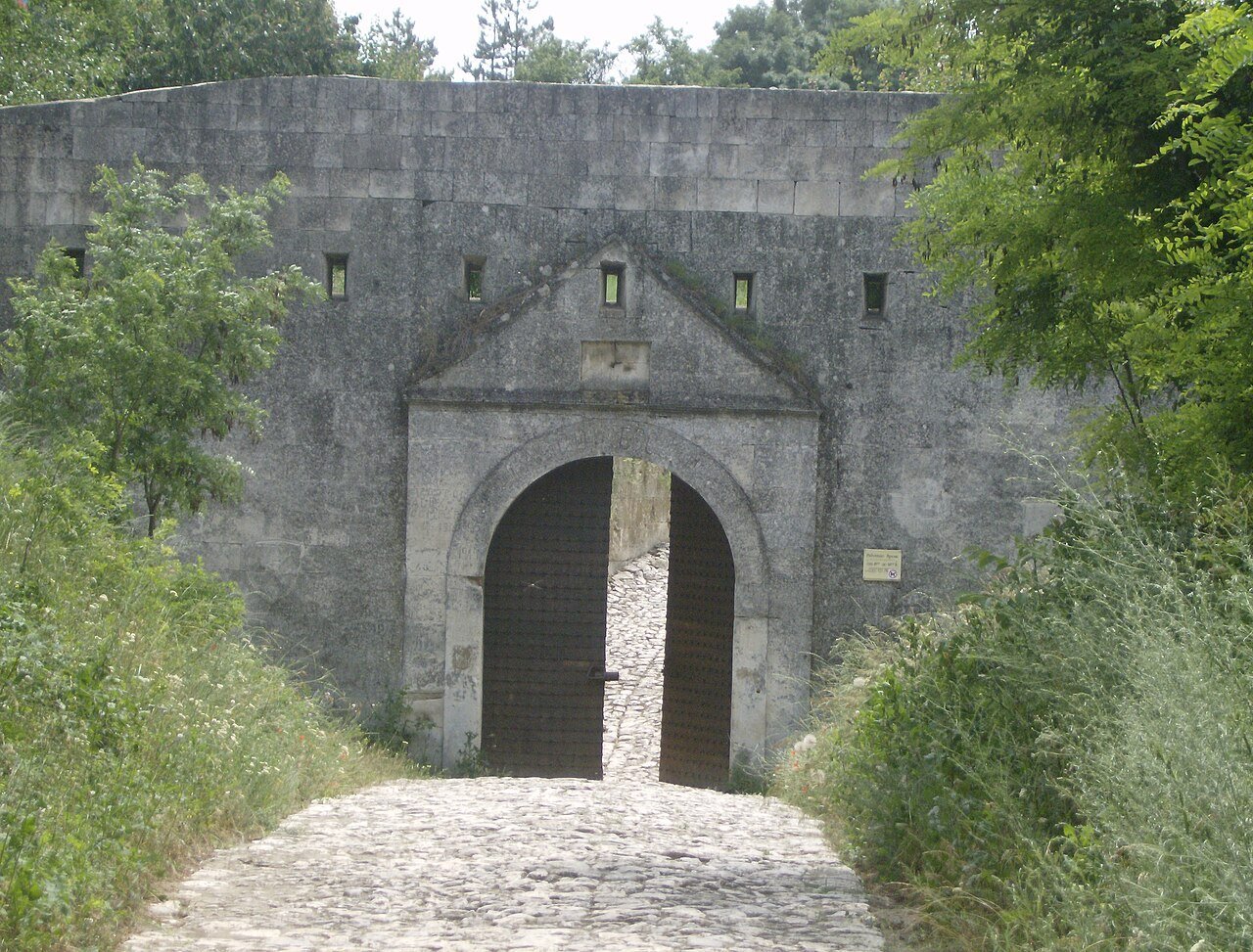
Medzhidi Tabia Fortress
Medzhidi Tabia is a fortress south of Silistra belonging to the Ottoman system of fortifications. It formed part of the historical setting of the Crimean War of 1853–1856 and the Russo-Turkish War of 1877–1878. The fortress was built between 1841 and 1853 to a design by the German military engineer Helmuth von Moltke, who later became chief of staff of the German army. In 1847 it was visited by Sultan Abdülmecid, after whom it was named Medzhidi Tabia. Around 300 Bulgarians were compelled to work on its construction. The master builders were hired from the Dryanovo region, while the stonemasons were local. During this period the region's first solid masonry churches of the National Revival were also built, at Alfatar in 1846 and Kalipetrovo in 1847. In 1854, during the Crimean War, Medzhidi Tabia successfully withstood a month-long Russian siege.
The fortress is hexagonal and reaches a height of approximately eight metres. Immediately beside it is a ditch that served as an obstacle and provided concealment. The ditch forms part of the fortress's strategic structure. Medzhidi Tabia is an excellent example of Ottoman engineering and architectural heritage, combining military and construction features that were essential during conflicts in the region.
Silistra, 1841–1853
Share:


