Glozhene Monastery

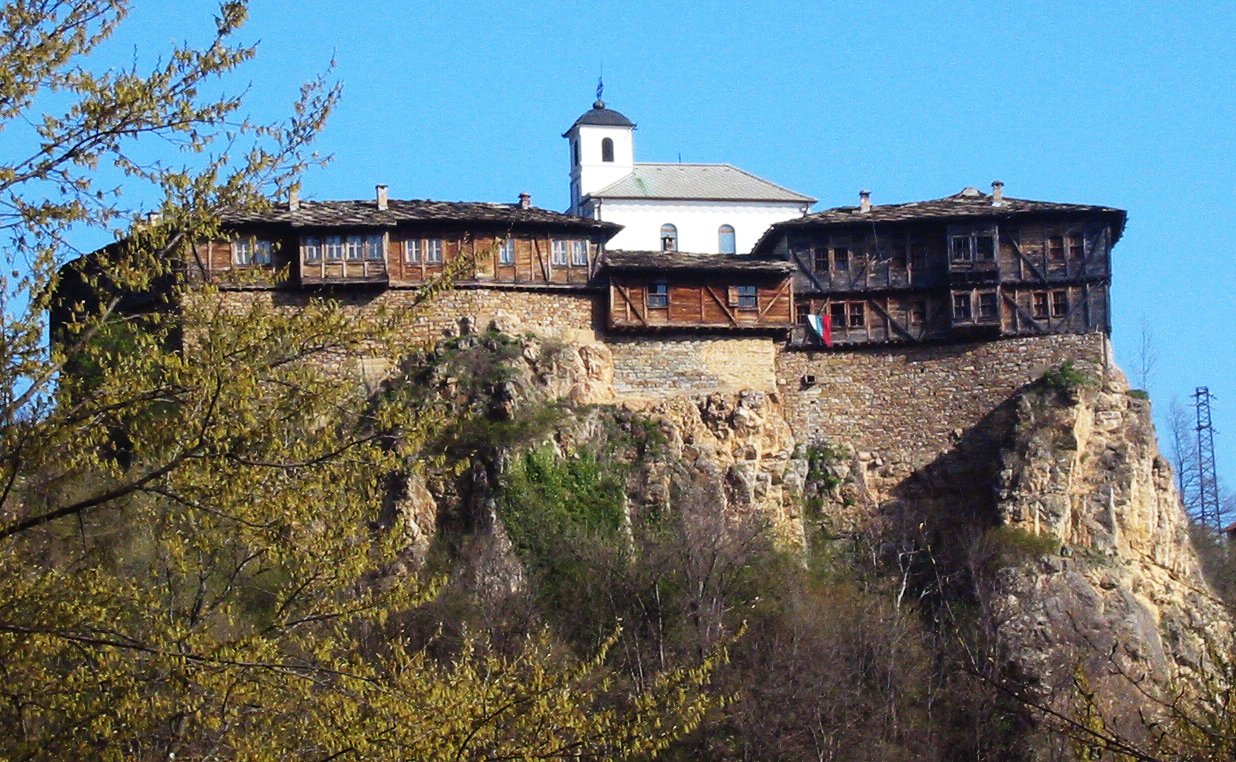
Glozhene Monastery
The Glozhene Monastery of St George the Victorious is a historical and cultural monument within the Diocese of Lovech of the Bulgarian Orthodox Church. It stands near the village of Glozhene in Teteven Municipality, Lovech Province, 12 km from Teteven, on the northeastern slope beneath the cliffs of Kamen Lisets Peak.
According to tradition, the monastery was built in the early thirteenth century by the Kyivan prince Georgiy Glozh. In another version of the legend, Prince Georgiy Glozh came to Bulgaria while fleeing the Tatars, and Tsar Ivan Asen II granted him land around present-day Glozhene. The prince founded a settlement and built the monastery on a rocky outcrop. A tradition relates that he began building it lower down, but the icon of St George that he had brought from his homeland disappeared and reappeared high on the rocks. This was interpreted as a sign, and the monastery was built on this summit, which was inaccessible in medieval times. The view from the monastery is impressive, and access to its entrance was obstructed by rocks that were broken away to make a road.
During the Ottoman invasion and after the fall of the Second Bulgarian Empire, Glozhene Monastery entered a period of hardship and poverty. Little is known about this period, but its inaccessible position and lack of strategic significance are thought to have spared it destruction by the Ottomans. Its properties were nevertheless confiscated, leaving it in great need.
A period of growth followed these difficult years. The monastery recovered its properties through donations from across the country. The number of monks increased, and it became a spiritual centre for the surrounding regions. It attracted worshippers dissatisfied with the Greek clergy and seeking spiritual guidance in Bulgarian.
During the eighteenth and early nineteenth centuries, Glozhene Monastery strengthened its connections throughout Bulgaria, Romania and Russia. Two old seals from this period survive, identifying the monastery as "Kyivan", while its collection includes many manuscripts and early printed books.
The monastery developed church schools. The school within the monastery itself is thought to have existed since its foundation, continuing to train novices as monks, priests and teachers until the Liberation. Glozhene Monastery also established dependent monastic houses and church schools in nearby villages.
During the national liberation struggle, Glozhene Monastery became one of Vasil Levski's secure bases. It also played an important role in supporting the Bulgarian Church and national unity.
Near Glozhene, Lovech Province, Thirteenth century
Share:


