Castra Martis Fortress

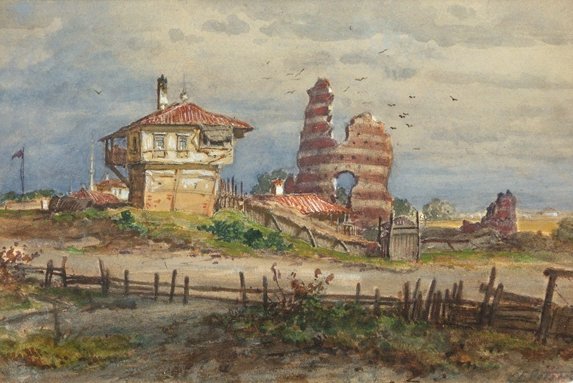
Castra Martis Fortress
Castra Martis, also known as the Fortress of Mars, is an important archaeological site in Kula, northwestern Bulgaria. Built in the Late Roman period, it formed part of the Roman Empire's restored Danube limes and was probably intended to protect the road from Bononia to Singidunum through Vrashka Chuka, the northwesternmost pass in the Balkan Mountains.
The fortress combines several historical phases. First, in the late third and early fourth centuries, the quadriburgium was built, measuring forty by forty metres with imposing corner towers. This phase is associated with Emperor Diocletian and the construction of the empire's frontier defences. The second phase involved a larger castellum built around the second quarter of the fourth century, fortified by walls and towers forming an irregular quadrilateral.
Castra Martis's historical role is highlighted by its participation in the council of 343 and by Emperor Gratian's passage through it in 377. In the fifth century, however, the fortress fell victim to Avar invasions and was destroyed. In the thirteenth–fourteenth century it was partially restored and served a defensive role during the Tsardom of Vidin.
Archaeological excavations provide valuable information about architecture and engineering skills in these periods. Including Castra Martis among the historic sites of Bulgaria's cultural heritage is exceptionally important, enriching our understanding of connections between different stages of the region's history and preserving valuable cultural memory.
Northwestern Bulgaria, Kula, Third and fourth centuries
Share:


