Basarbovo Monastery

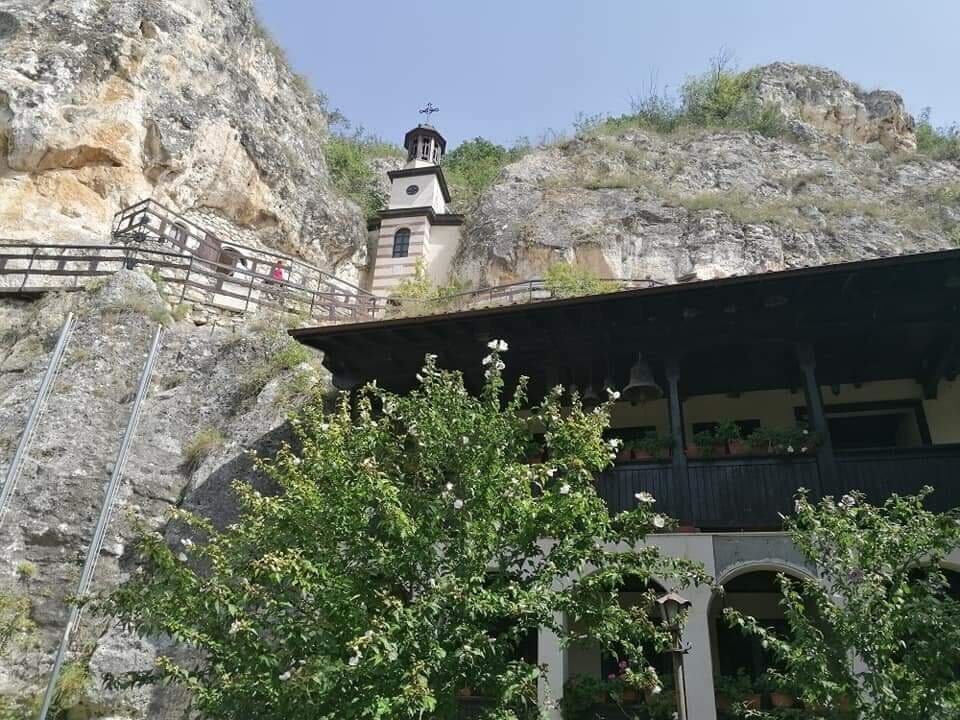

Basarbovo Monastery
The Basarbovo Monastery of St Dimitar of Basarbovo is a unique rock-hewn monastery in Bulgaria, the only one of its kind in the country whose church is accessible to visitors every day. It stands in the Rusenski Lom River valley near Basarbovo in Ruse Municipality, ten kilometres from Ruse. In 1978 it was declared an archaeological cultural monument of local significance. The monastery's historical roots recede into the past: it was founded during the Second Bulgarian Empire, in the twelfth–fourteenth century, as attested by Ottoman tax registers from 1431. It is recorded as "Besaraba" and also as the "timar of the great voivode", in which Ivanko Basarab, Tsar Ivan Alexander's father-in-law, played an important role. Tsaritsa Theodora Basarab, Ivan Alexander's wife and daughter of the Wallachian voivode Ivanko Basarab, emerged as a donor to the monastery, while the nearby village of Basarbovo bears her name. St Dimitar of Basarbovo, who spent much of his life in the monastery, is its best-known monk and abbot. During the Russo-Turkish War of 1768–1774, the saint's relics were transferred to Bucharest, where they remain today. In 1937 the monk Hrisant renovated the monastery. In 2016 its new, larger church, dedicated to the Transfiguration of the Lord and entirely decorated with wall paintings, was consecrated. Today it remains an active monastery for men, celebrating its patronal feast on 27 October, St Dimitar of Basarbovo's day.
Ruse Municipality, near Basarbovo, Twelfth–fourteenth century
Share:


