Aladzha Monastery

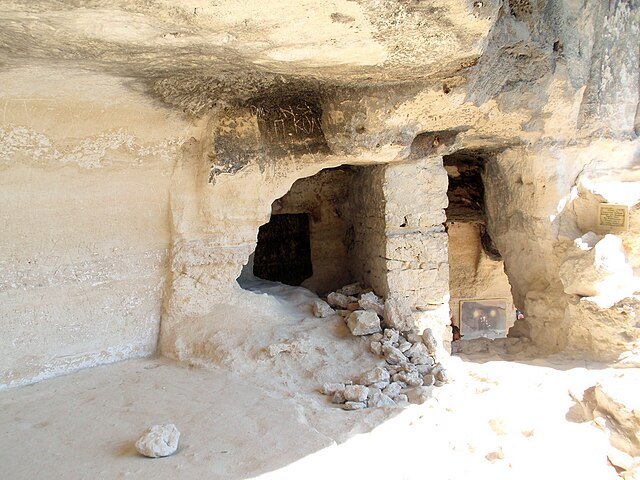
Aladzha Monastery
Aladzha Monastery is a medieval rock-hewn monastery in Bulgaria. Its caves are cut on several levels into a twenty-five-metre-high vertical karst cliff near the upper edge of the Franga Plateau, and the complex includes two small nearby catacombs. Its old Christian name is unknown, but according to a tradition recorded by Karel Škorpil, its patron was St Spas, from Christ the Saviour. Since 1960 Bulgarian Christians have called it Holy Trinity. The name "aladzha", from Turkish alaca, is of Persian or Arabic origin and means "colourful, variegated". Remains of a three-aisled church of the fifth–sixth century have been discovered near the medieval monastery. The monastery was founded in the twelfth–thirteenth century but abandoned in the late fifteenth or early sixteenth century. The first systematic investigations were carried out in the late nineteenth century by the brothers Hermann and Karel Škorpil. The rock-hewn monastery reached its greatest prosperity during the Second Bulgarian Empire under the influence of the hesychast movement. During Ottoman rule, monastic life died out.
Varna Province, 3 km from Golden Sands resort, Twelfth–thirteenth century
Share:


